

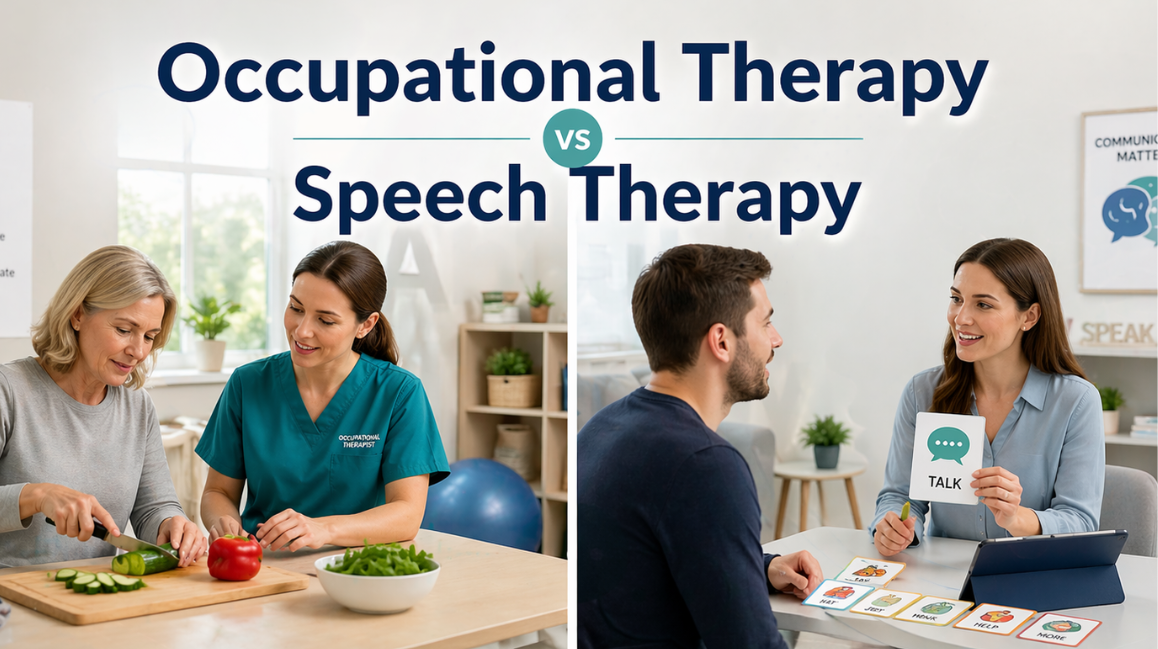
When a loved one needs support to regain skills, improve independence, or overcome developmental challenges, it’s common to hear about different types of therapy. Two of the most frequently recommended are occupational therapy and speech therapy. While they may seem similar at first glance, they serve distinct purposes—and understanding the difference can help families make more informed decisions.
In this guide, we’ll break down occupational therapy vs speech therapy in a clear, practical way. You’ll learn what each therapy focuses on, how they differ, where they overlap, and how to determine which one might be the right fit.
The Basics of Therapy Services
Before comparing occupational therapy vs speech therapy, it helps to understand what therapy services aim to do overall.
Both therapies are designed to improve a person’s ability to function in daily life. They are commonly used for children with developmental delays, adults recovering from injury, and individuals managing chronic conditions.
However, the key difference lies in what skills they target.
- Occupational therapy focuses on daily living and functional independence
- Speech therapy focuses on communication and swallowing abilities
Even though their goals differ, both are essential in helping individuals live fuller, more independent lives.
What Is Occupational Therapy?
Occupational therapy (OT) helps individuals develop, recover, or maintain the skills needed for everyday activities—also known as “occupations.”
Think of occupational therapy as the bridge between a person’s abilities and their daily responsibilities. Whether it’s getting dressed, writing, cooking, or using tools, OT ensures those tasks are manageable and meaningful.
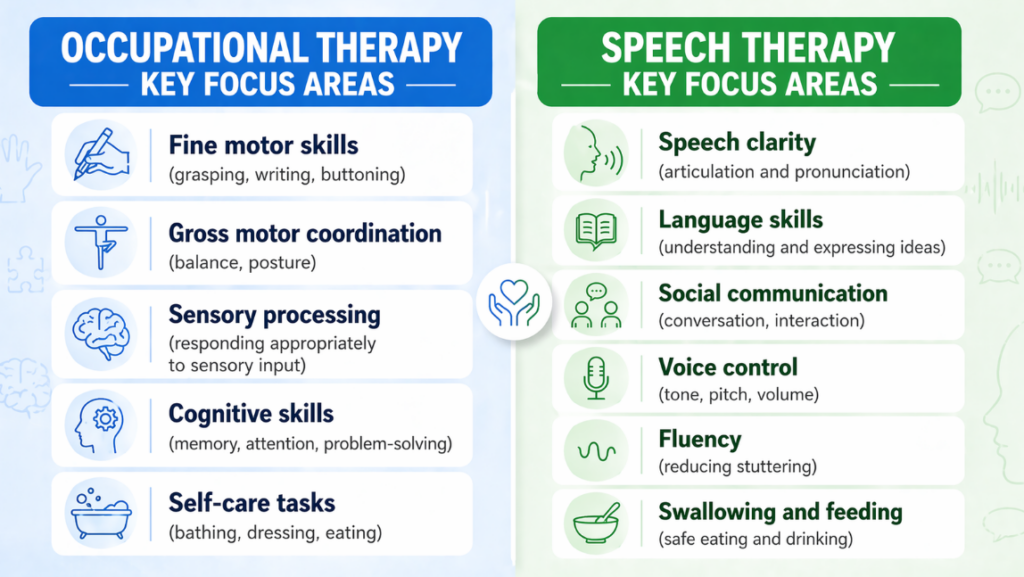
Key Focus Areas
Occupational therapy addresses a wide range of skills:
- Fine motor skills (grasping, writing, buttoning)
- Gross motor coordination (balance, posture)
- Sensory processing (responding appropriately to sensory input)
- Cognitive skills (memory, attention, problem-solving)
- Self-care tasks (bathing, dressing, eating)
Who Benefits from Occupational Therapy?
Occupational therapy supports individuals across all ages:
- Children with developmental delays or sensory challenges
- Adults recovering from stroke or injury
- Seniors managing age-related conditions
- Individuals with disabilities affecting daily function
Examples of Occupational Therapy Activities
- Practicing how to hold a pencil or utensils
- Learning to tie shoelaces or dress independently
- Improving hand-eye coordination through games
- Adapting environments for easier mobility
What Is Speech Therapy?
Speech therapy focuses on communication skills, language development, and swallowing functions.
Speech therapy goes beyond just speaking clearly—it helps individuals express themselves, understand others, and safely manage eating and drinking.
Key Focus Areas
Speech therapy typically includes:
- Speech clarity (articulation and pronunciation)
- Language skills (understanding and expressing ideas)
- Social communication (conversation, interaction)
- Voice control (tone, pitch, volume)
- Fluency (reducing stuttering)
- Swallowing and feeding (safe eating and drinking)
Who Benefits from Speech Therapy?
Speech therapy is beneficial for:
- Children with speech delays or language disorders
- Individuals with autism spectrum conditions
- Stroke survivors with communication difficulties
- People with voice or swallowing disorders
Examples of Speech Therapy Activities
- Practicing sounds and word formation
- Using picture cards to build vocabulary
- Engaging in conversation exercises
- Strengthening oral muscles for swallowing
Occupational Therapy vs Speech Therapy: Side-by-Side Comparison
To better understand occupational therapy vs speech therapy, here’s a simple comparison:
| Aspect | Occupational Therapy | Speech Therapy |
| Primary Goal | Improve daily living skills | Improve communication and swallowing |
| Focus Areas | Motor skills, sensory processing, independence | Speech, language, voice, feeding |
| Daily Activities | Dressing, writing, eating, mobility | Speaking, understanding, social interaction |
| Target Skills | Physical + cognitive function | Verbal + nonverbal communication |
| Common Tools | Adaptive equipment, sensory tools | Language exercises, articulation tools |
This table highlights the core differences while showing how both therapies contribute to overall well-being.
Key Differences Between Occupational Therapy vs Speech Therapy
Understanding occupational therapy vs speech therapy becomes clearer when you break down their main differences.
1. Focus of Treatment
- Occupational therapy focuses on what a person does
- Speech therapy focuses on how a person communicates
2. Type of Skills Developed
- OT develops physical, sensory, and functional skills
- Speech therapy develops communication and swallowing abilities
3. Approach to Independence
- OT promotes independence through task completion
- Speech therapy promotes independence through expression and understanding
4. Tools and Techniques
- OT may use adaptive equipment and environmental modifications
- Speech therapy uses language exercises, repetition, and communication strategies
Where Occupational Therapy and Speech Therapy Overlap
Although there are clear differences, occupational therapy vs speech therapy isn’t always a strict divide. In many cases, the two therapies complement each other.
Shared Goals
Both therapies aim to:
- Improve quality of life
- Increase independence
- Enhance participation in daily activities
Areas of Overlap
- Feeding and swallowing
- OT may address motor coordination for eating
- Speech therapy focuses on swallowing safety
- Cognitive skills
- OT supports attention and problem-solving
- Speech therapy supports language comprehension
- Social interaction
- OT helps with behavioral and sensory regulation
- Speech therapy builds communication skills
How to Know Which Therapy Is Needed
Choosing between occupational therapy vs speech therapy depends on the individual’s specific challenges.
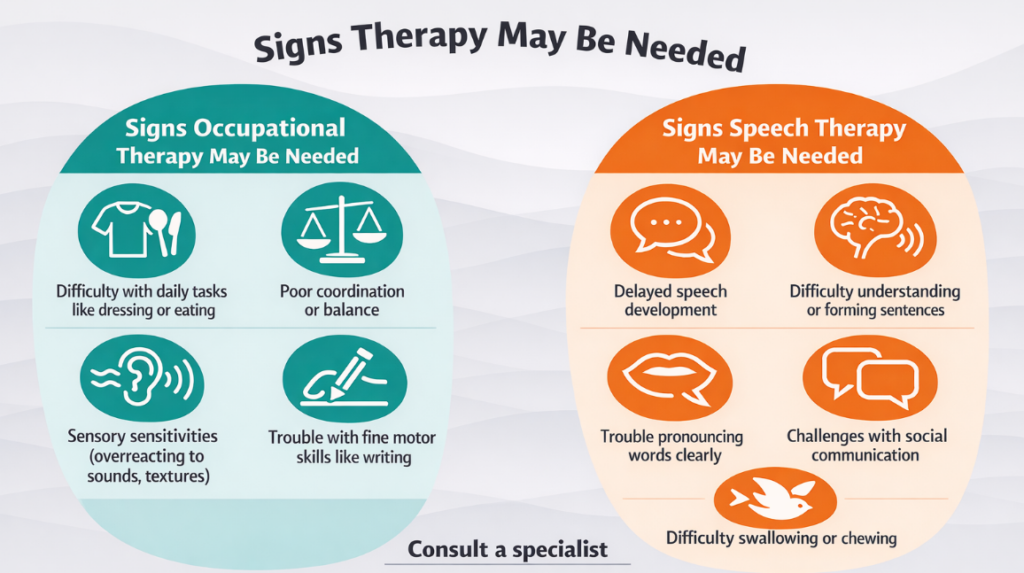
Signs Occupational Therapy May Be Needed
- Difficulty with daily tasks like dressing or eating
- Poor coordination or balance
- Sensory sensitivities (overreacting to sounds, textures)
- Trouble with fine motor skills like writing
Signs Speech Therapy May Be Needed
- Delayed speech development
- Difficulty understanding or forming sentences
- Trouble pronouncing words clearly
- Challenges with social communication
- Difficulty swallowing or chewing
When Both Are Needed
In many situations, individuals benefit from both therapies working together, especially when challenges affect multiple areas.
Occupational Therapy vs Speech Therapy for Children
For children, early intervention can make a significant difference. Understanding occupational therapy vs speech therapy helps parents choose the right support at the right time.
Occupational Therapy for Children
OT helps children:
- Develop motor skills needed for school
- Improve sensory regulation
- Build independence in self-care
Speech Therapy for Children
Speech therapy helps children:
- Develop language and vocabulary
- Improve pronunciation
- Strengthen social communication skills
Combined Approach
Children with developmental delays often receive both therapies to address:
- Learning challenges
- Social interaction
- Daily functioning
Occupational Therapy vs Speech Therapy for Adults
Adults often require therapy after injury, illness, or neurological conditions. Here’s how occupational therapy vs speech therapy applies in adult care.
Occupational Therapy for Adults
OT helps adults:
- Regain independence after injury
- Adapt to physical limitations
- Return to work or daily routines
Speech Therapy for Adults
Speech therapy helps adults:
- Recover communication after stroke
- Manage voice disorders
- Improve swallowing safety
Combined Rehabilitation
In rehabilitation settings, both therapies often work together to support recovery.
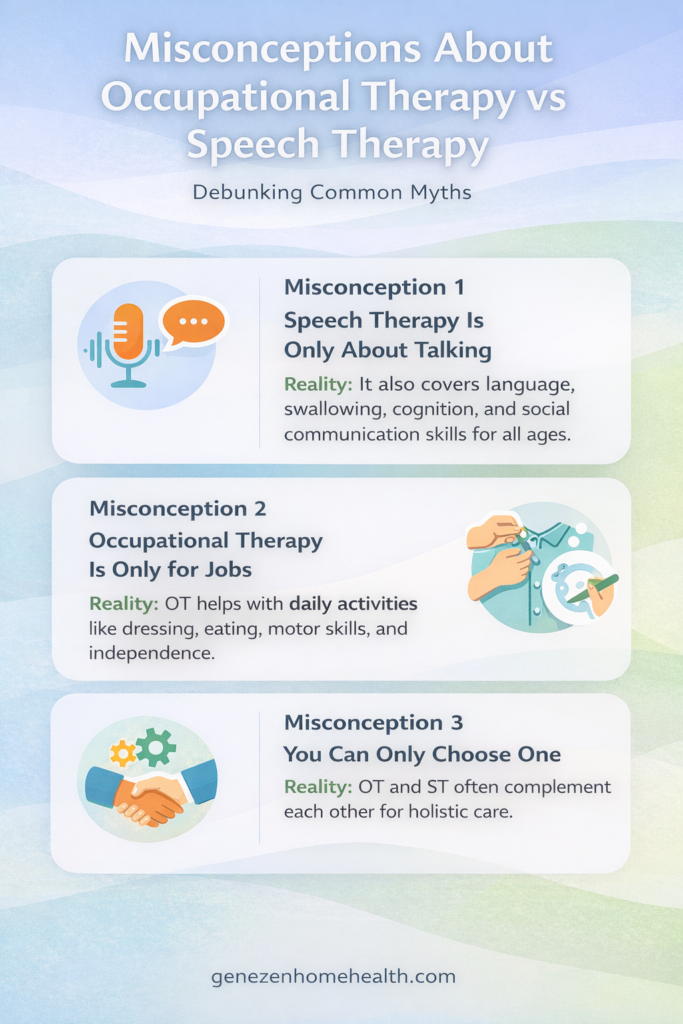
Common Misconceptions About Occupational Therapy vs Speech Therapy
Understanding occupational therapy vs speech therapy also means clearing up common myths.
Misconception 1: Speech Therapy Is Only About Talking
Speech therapy includes language, comprehension, and even swallowing—not just speaking.
Misconception 2: Occupational Therapy Is Only for Jobs
The term “occupation” refers to daily activities, not just employment.
Misconception 3: You Can Only Choose One
Many individuals benefit from both therapies simultaneously.
Benefits of Understanding the Difference
Knowing the difference between occupational therapy vs speech therapy empowers families and caregivers.
Key Benefits
- Better decision-making
- More targeted support
- Improved therapy outcomes
- Clearer communication with professionals
Practical Tips for Families
If you’re deciding between occupational therapy vs speech therapy, these tips can help:
- Observe daily challenges: What tasks are difficult?
- Consult professionals: Evaluations can guide therapy choices
- Stay involved: Practice skills at home
- Be patient: Progress takes time
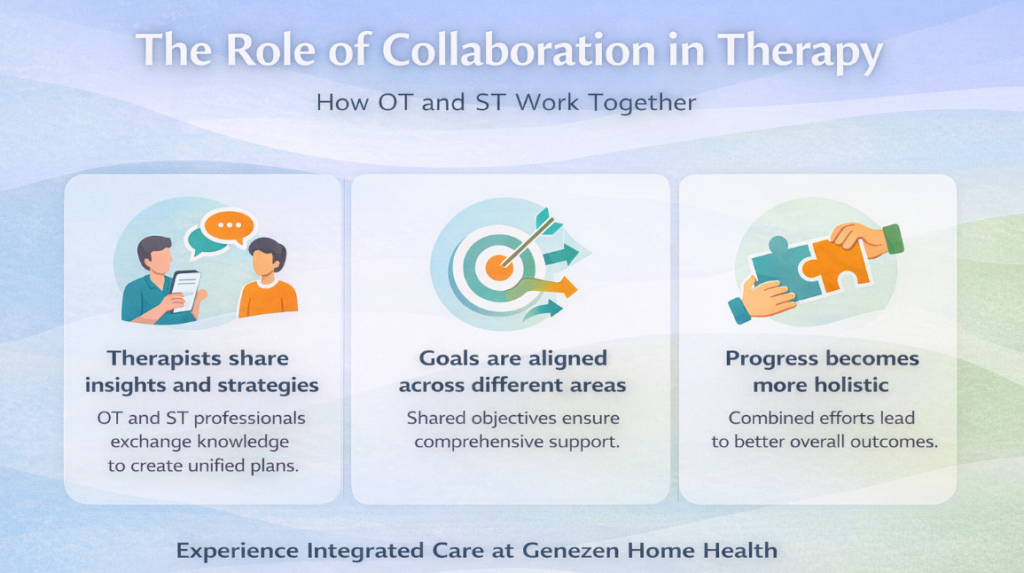
The Role of Collaboration in Therapy
One of the most important aspects of therapy is teamwork.
Why Collaboration Matters
- Therapists share insights and strategies
- Goals are aligned across different areas
- Progress becomes more holistic
In many cases, the question isn’t just occupational therapy vs speech therapy—it’s how both can work together effectively.
Looking Beyond Labels: A Holistic Approach
While comparing occupational therapy vs speech therapy is helpful, it’s equally important to focus on the individual—not just the therapy type.
What Truly Matters
- Personalized care
- Consistent support
- Real-life application of skills
Therapy is most effective when it adapts to the person, not the other way around.
What to Expect During Therapy
Occupational Therapy Sessions
- Hands-on activities
- Use of tools and exercises
- Focus on real-life tasks
Speech Therapy Sessions
- Structured language exercises
- Interactive communication practice
- Gradual skill-building
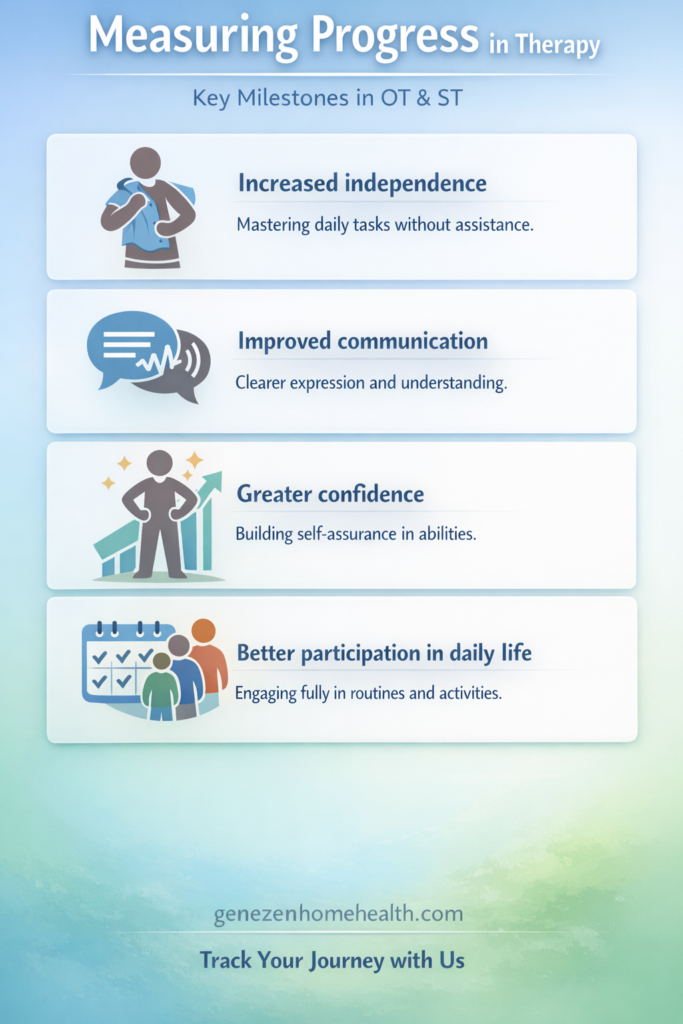
Measuring Progress in Therapy
Progress looks different for everyone, but common indicators include:
- Increased independence
- Improved communication
- Greater confidence
- Better participation in daily life
Understanding occupational therapy vs speech therapy helps set realistic expectations and track meaningful progress.
Final Thoughts: Choosing the Right Path Forward
Understanding the difference between occupational therapy vs speech therapy can make a meaningful impact on how individuals receive care and support. While occupational therapy focuses on improving daily living skills and independence, speech therapy strengthens communication and swallowing abilities. Both play vital roles, and in many cases, they work best together to address a person’s overall needs.
If you’re navigating therapy options, the next step is finding the right guidance and support system tailored to your situation. Learn how professional care services can help you make confident, informed decisions and explore personalized therapy solutions with Genezen Home Health Care today.