

Speech therapy is one of the most misunderstood areas of healthcare and developmental support. For many families, uncertainty and misinformation create hesitation—sometimes delaying help that could make a meaningful difference in a child’s communication, confidence, and overall quality of life. These misunderstandings are often rooted in long-standing myths about speech therapy that continue to circulate among parents, caregivers, and even communities.
This article breaks down the most common myths about speech therapy, replacing them with clear, practical truths. By understanding what speech therapy really is—and what it is not—families can make informed decisions without fear, stigma, or unnecessary delay.
Why Misconceptions About Speech Therapy Matter
Before diving into specific myths, it’s important to understand why these beliefs can be harmful. Misconceptions don’t just shape opinions—they influence action.
When families believe inaccurate myths about speech therapy, they may:
- Delay seeking help
- Underestimate the importance of early intervention
- Feel unnecessary shame or guilt
- Miss critical developmental windows
Speech and communication are foundational to learning, relationships, and independence. The sooner challenges are addressed, the better the outcomes tend to be.
Myth vs. Reality at a Glance
| Common Myth | The Truth Families Need to Know |
| Speech therapy is only for children who can’t talk | It supports a wide range of communication challenges |
| Kids will “grow out of it” | Some delays persist without intervention |
| Speech therapy is only for young children | People of all ages can benefit |
| Therapy is just repeating words | It involves structured, individualized strategies |
| It’s only about speech sounds | It also addresses language, social skills, and cognition |
| Therapy takes years to work | Progress can begin quickly with consistency |
| It’s too expensive or inaccessible | Options and formats vary widely |
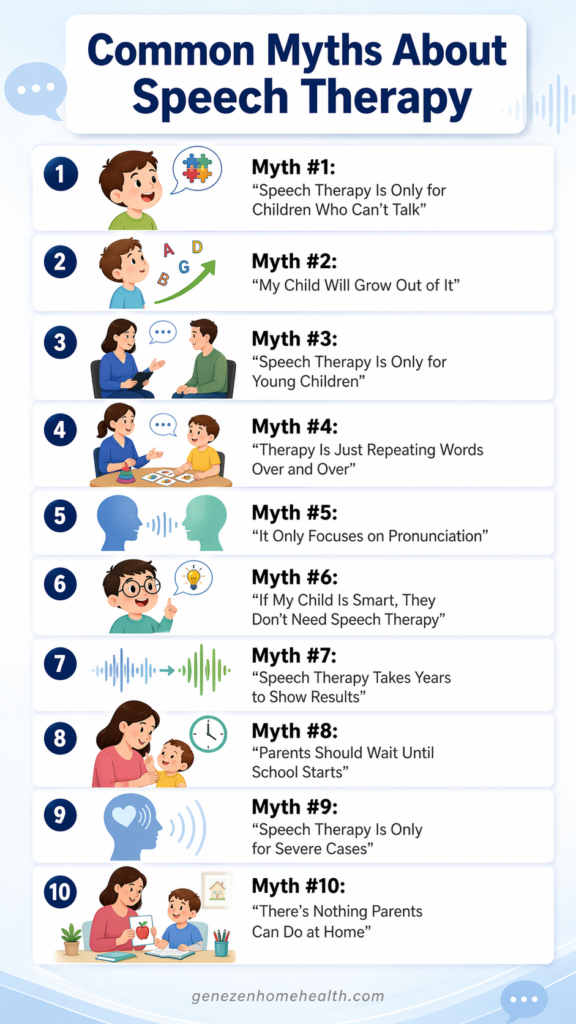
Myth #1: “Speech Therapy Is Only for Children Who Can’t Talk”
Many people assume that speech therapy is only necessary when a child is completely nonverbal. This is one of the most limiting myths about speech therapy.
The Truth:
Speech therapy addresses far more than the ability to speak. It includes:
- Difficulty forming words clearly
- Trouble understanding language
- Limited vocabulary for age
- Challenges with social communication
- Voice and fluency issues (like stuttering)
A child who talks a lot but struggles to be understood may benefit just as much as a child who speaks very little.
Myth #2: “My Child Will Grow Out of It”
This is one of the most common myths about speech therapy—and one of the most risky.
The Truth:
While some children naturally catch up, others do not. Waiting without guidance can lead to:
- Worsening communication gaps
- Frustration and behavioral issues
- Academic challenges later on
Signs that support may be needed:
- Limited words by expected milestones
- Difficulty following simple instructions
- Trouble interacting with peers
- Speech that is hard to understand
Early support doesn’t mean something is “wrong.” It means giving a child the tools they need to succeed.
Myth #3: “Speech Therapy Is Only for Young Children”
Speech therapy is often associated with toddlers and preschoolers, but this belief overlooks a wide range of individuals who benefit from it.
The Truth:
Speech therapy supports people across all life stages, including:
- School-aged children with language or literacy challenges
- Teens with social communication difficulties
- Adults recovering from stroke or injury
- Individuals with lifelong communication differences
Communication is a lifelong skill, and improvement is always possible.
Myth #4: “Therapy Is Just Repeating Words Over and Over”
Some families picture speech therapy as simple drills—repeating sounds or words endlessly.
The Truth:
Speech therapy is structured, personalized, and interactive. It may include:
- Play-based learning for young children
- Games and storytelling
- Visual supports and cues
- Real-life conversation practice
Therapists design sessions to match each individual’s needs, making therapy both effective and engaging.
Myth #5: “It Only Focuses on Pronunciation”
Another common misconception is that speech therapy is only about correcting how words sound.
The Truth:
Speech therapy addresses multiple areas of communication, including:
- Expressive language (using words to communicate)
- Receptive language (understanding others)
- Social communication (taking turns, reading cues)
- Fluency (smoothness of speech)
- Voice quality
This broader scope is often overlooked in myths about speech therapy, but it’s essential to understanding its value.
Myth #6: “If My Child Is Smart, They Don’t Need Speech Therapy”
Some families assume that intelligence and communication skills are directly linked.
The Truth:
A child can be highly intelligent and still struggle with communication. Speech and language challenges are not a reflection of intelligence.
In fact, addressing communication difficulties early can help children better express their knowledge and abilities.
Myth #7: “Speech Therapy Takes Years to Show Results”
The idea that therapy is a long, drawn-out process can discourage families from starting.
The Truth:
Progress often begins sooner than expected—especially with consistent practice and family involvement.
Factors that influence progress:
- Frequency of sessions
- Severity of the challenge
- Practice at home
- Individual learning style
Some individuals show noticeable improvements within weeks or months.
Myth #8: “Parents Should Wait Until School Starts”
Another one of the persistent myths about speech therapy is that support should only begin once a child enters formal education.
The Truth:
Waiting can make challenges harder to address. Early intervention:
- Builds foundational communication skills
- Prevents frustration and social difficulties
- Supports smoother transitions into school
The earlier support begins, the more opportunities a child has to develop strong communication habits.
Myth #9: “Speech Therapy Is Only for Severe Cases”
Many families hesitate because they believe their child’s challenges aren’t “serious enough.”
The Truth:
Speech therapy is beneficial across a spectrum of needs—from mild delays to more complex conditions.
Even small communication difficulties can impact:
- Confidence
- Social interactions
- Academic performance
Addressing concerns early can prevent them from becoming bigger challenges later.
Myth #10: “There’s Nothing Parents Can Do at Home”
Some believe that progress only happens during therapy sessions.
The Truth:
Family involvement is one of the most important factors in success.
Simple ways families can support progress:
- Talking and reading together daily
- Encouraging conversation during routines
- Modeling clear speech and language
- Following therapist recommendations
Speech therapy works best as a partnership—not a one-time weekly activity.
Why These Myths Persist
Understanding why myths about speech therapy continue can help families move past them more confidently.
Common reasons include:
- Lack of awareness about communication development: Many families are unsure what typical speech and language milestones look like, making it difficult to recognize early signs of delay or difference. Without clear guidance, it’s easy to assume everything will resolve on its own or that concerns are not significant enough to act on.
- Cultural stigma around developmental support: In some communities, seeking help for speech or language challenges may be misunderstood as a sign of weakness or failure. This stigma can discourage families from exploring therapy, even when they notice something may not be progressing as expected.
- Outdated information passed between generations: Advice like “they’ll grow out of it” or “boys talk later” often comes from well-meaning relatives, but it may not reflect current understanding of communication development. These long-held beliefs continue to shape decisions, even when more accurate information is available.
- Fear of labeling or judgment: Some families worry that pursuing speech therapy will result in their child being labeled or treated differently. This fear can delay action, even though early support is often the most effective and empowering approach.
The more open conversations become, the easier it is to replace myths with facts.
The Real Impact of Early Support
When families move past myths about speech therapy and seek help early, the benefits extend far beyond communication.
Positive outcomes may include:
- Increased confidence in speaking and socializing
- Stronger relationships with peers and family
- Improved academic readiness
- Reduced frustration and behavioral challenges
Communication is not just about words—it’s about connection, understanding, and independence.
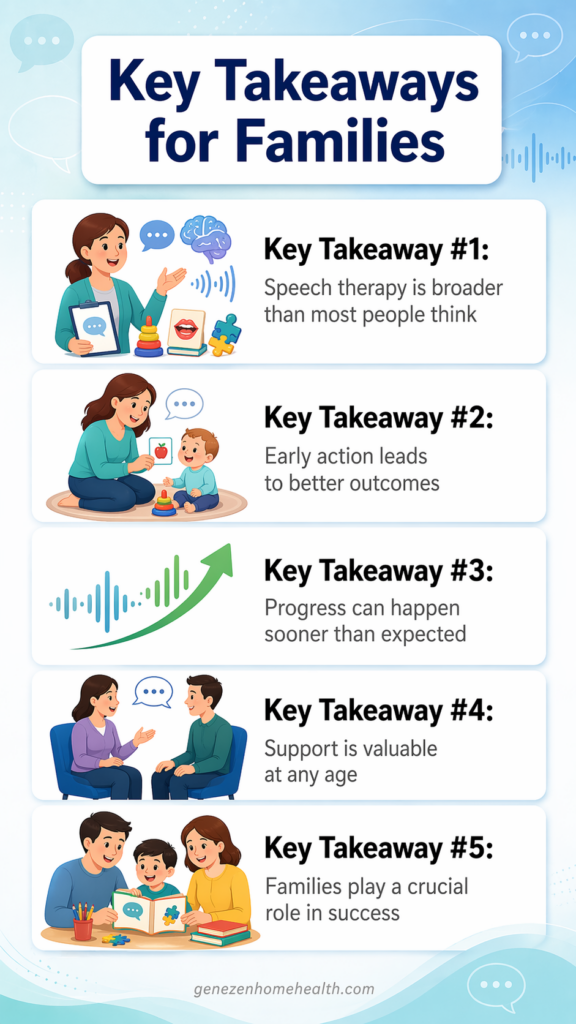
Key Takeaways for Families
If there’s one thing to remember, it’s this: misinformation should never stand in the way of support.
Keep these points in mind:
- Speech therapy is broader than most people think
- Early action leads to better outcomes
- Progress can happen sooner than expected
- Support is valuable at any age
- Families play a crucial role in success
Replacing myths about speech therapy with accurate knowledge empowers families to act with confidence instead of hesitation.
Ready to See What’s Possible? Here’s What You Need to Know Next
Understanding the truth behind common myths about speech therapy can completely change how families approach communication challenges. When misconceptions are replaced with clarity, it becomes easier to recognize when support is needed—and to take that first step without fear or doubt.
If you’re wondering whether speech therapy could make a difference, now is the time to explore your options and get guidance tailored to your situation. Genezen Home Health Care offers compassionate, individualized support designed to help individuals build stronger communication skills and greater confidence—right where they are.