


Your first physical therapy appointment is an important step toward recovery, improved mobility, and a better quality of life. Whether you’re healing from surgery, managing a chronic condition, or regaining strength after an injury, this initial visit sets the foundation for your entire rehabilitation journey. During this appointment, a licensed physical therapist evaluates your condition, identifies limitations, and begins building a personalized plan designed to help you move safely and confidently again.
As you prepare for your first physical therapy appointment, knowing what will happen can ease anxiety and help you get the most out of your care. From the initial assessment to goal-setting and early treatment, each part of the visit is structured to understand your needs and start your path to recovery.
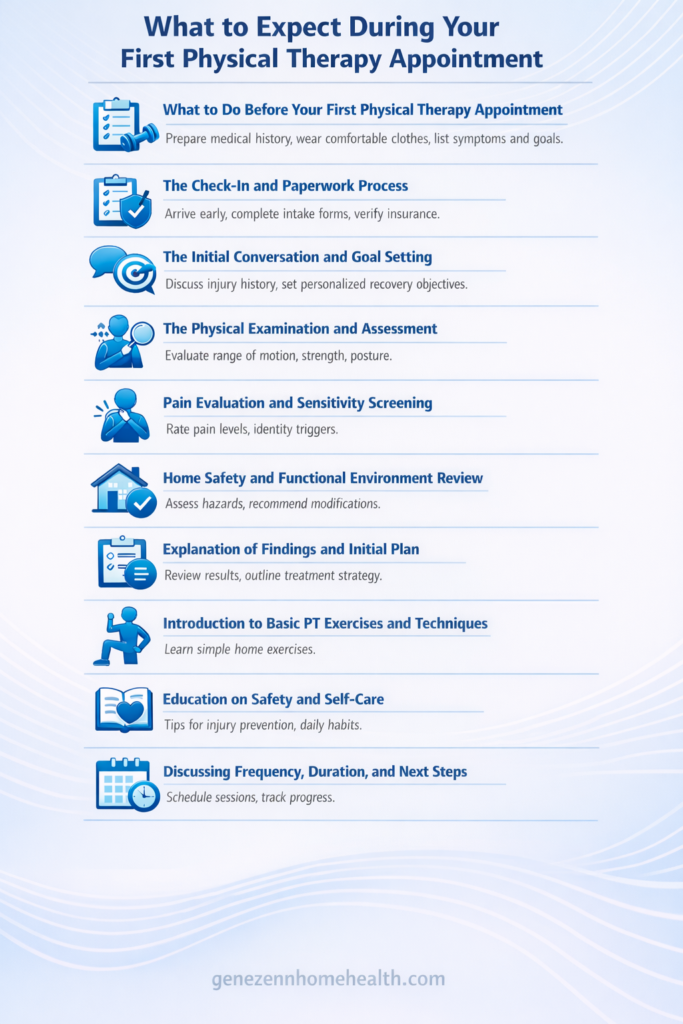
What to Expect During Your First Physical Therapy Appointment
A first physical therapy appointment is less about intensive treatment and more about gathering information, understanding your goals, and laying the foundation for a safe, effective plan of care. The exact structure may vary slightly depending on your condition, age, and setting, but most initial visits follow a similar pattern.
1. What to Do Before Your First Physical Therapy Appointment
Before your first physical therapy appointment arrives, there are several practical steps you can take to prepare. Gathering documentation and organizing your thoughts helps the therapist get a clear picture of your situation.
- Ensure you have a written prescription or referral from your doctor (if required by your insurance or local regulations).
- Bring a list of all current medications, past surgeries, and relevant medical tests or imaging reports (X‑rays, MRI, etc.).
- Write down the main problem(s) you want to address, such as specific pain locations, difficulty walking, or decreased balance.
- Note any failed treatments or therapies you’ve tried before, so the therapist is not repeating the same interventions.
If the appointment is at home, you should also:
- Clear a small area near where you plan to work (for exercises or functional training).
- Wear comfortable, loose clothing that allows easy movement, such as athletic wear or loose‑fit pants and a T‑shirt.
- Have a chair with armrests and a flat walking surface available if you will be practicing sitting, standing, or walking tasks.
2. The Check‑In and Paperwork Process
When you arrive for your first physical therapy appointment, the initial portion of the visit often involves administrative tasks. Even in home‑based settings, therapists still need basic information to document your case properly.
- You may be asked to confirm your contact details, insurance information, and emergency contacts.
- You will likely sign consent forms or release documents explaining the scope of therapy and how your information will be used.
- Some clinics or agencies may ask you to complete a short questionnaire about your pain level, daily activities, and how your condition affects your life.
This step may feel tedious, but it is important for legal, safety, and insurance purposes. Mentally preparing yourself for this formality can reduce frustration and help you transition more easily into the clinical part of the first physical therapy appointment.
3. The Initial Conversation and Goal Setting
After the paperwork, the therapist will usually begin the first physical therapy appointment with a conversation. This is your opportunity to explain your story in detail and to express what you hope to achieve.
- The therapist will ask about how your injury or condition started, when symptoms worsen or improve, and what activities you can or cannot do.
- You may discuss your typical daily routine, including work, hobbies, and household tasks, so the plan can be tailored to your real‑life needs.
- The therapist will invite you to share short‑term and long‑term goals, such as “walking without a cane,” “reducing back pain,” or “returning to gardening.”
This part of the first physical therapy appointment is often the most interactive. The clearer you are about your goals, the more closely the therapist can align interventions with what matters most to you.
4. The Physical Examination and Assessment
The centerpiece of a first physical therapy appointment is the physical examination. Here, the therapist uses their clinical skills to assess your body mechanics, strength, flexibility, balance, and functional abilities.
- The therapist may ask you to perform simple movements, such as bending, reaching, or stepping, to observe how you move and where discomfort occurs.
- They may test muscle strength by gently guiding your limbs against light resistance or checking your ability to hold certain positions.
- Range‑of‑motion tests measure how far you can move your joints safely, which helps identify stiff or restricted areas.
Depending on your condition, the therapist may also:
- Check your balance and coordination, such as walking a short distance or standing on one leg.
- Evaluate your posture and how weight is distributed when standing or sitting.
- Assess your ability to perform basic tasks like getting up from a chair, climbing stairs, or transferring from bed to a chair.
5. Pain Evaluation and Sensitivity Screening
Pain is a common reason people seek physical therapy, so the first physical therapy appointment usually includes a careful evaluation of your symptoms. The therapist wants to understand not only where you hurt but also how it affects your daily life.
- You may be asked to rate your pain on a scale (for example, 0–10) and to describe the quality of the pain (sharp, dull, burning, etc.).
- The therapist may experiment with different positions or movements to see which ones increase or decrease your pain.
- They may also screen for “red flag” signs—such as sudden onset of severe pain, numbness, weakness, or loss of bladder or bowel control—that need urgent medical attention.
This portion of the first physical therapy appointment helps the therapist decide which treatments are safe and which activities should be modified or avoided in the early stages of recovery.
6. Home Safety and Functional Environment Review

If your first physical therapy appointment takes place at home, the therapist will often take a brief look at your environment. This step is especially important for older adults or those recovering from surgery or serious illness.
- The therapist may check for hazards such as loose rugs, poor lighting, cluttered pathways, or unstable furniture.
- They may evaluate the accessibility of key areas like the bathroom, bedroom, and kitchen to see if grab bars, non‑slip mats, or assistive devices are needed.
- They might also observe how you use canes, walkers, or other mobility aids, offering guidance on safer alternatives if necessary.
7. Explanation of Findings and Initial Plan
By the end of the assessment phase, the therapist will usually summarize what they have found during your first physical therapy appointment. This is a crucial moment for understanding your condition and the proposed treatment path.
- The therapist may explain which movements or postures are contributing to your symptoms and which are less likely to be harmful.
- They may outline a short‑term plan, including how often you should receive therapy, what types of exercises or techniques you will likely use, and what progress looks like.
- They may also clarify any limitations or precautions, such as avoiding certain activities or positions until you are stronger or more stable.
It is normal to have questions during this discussion. Writing down questions before your first physical therapy appointment can help you remember what to ask.
8. Introduction to Basic PT Exercises and Techniques
Although the first physical therapy appointment is mostly evaluative, many therapists introduce simple exercises or techniques toward the end of the session. This helps you gain immediate confidence and provides a starting point for your rehabilitation.
- You may be taught gentle stretches or mobility exercises to improve flexibility and reduce stiffness.
- The therapist might show you how to perform light strengthening movements using body weight or simple equipment, such as resistance bands.
- You may also learn basic pain‑management strategies, such as breathing techniques, pacing activities, or proper body mechanics for lifting or bending.
These early exercises are usually low‑intensity and focused on comfort and safety. The therapist will observe your form and correct mistakes so you can practice correctly at home.
9. Education on Safety and Self‑Care
Education is a core part of any first physical therapy appointment. Physical therapists aim to help you understand your body so you can participate actively in your recovery instead of relying solely on passive treatments.
- You may receive guidance on how to monitor your symptoms, when to push a little harder, and when to dial it back.
- The therapist may explain the importance of posture, proper body mechanics, and ergonomic adjustments at work or home.
- You could also learn simple strategies for preventing flare‑ups, such as taking short breaks during prolonged sitting or using heat/cold appropriately.
This educational component helps you feel less helpless and more empowered during your first physical therapy appointment and beyond.
10. Discussing Frequency, Duration, and Next Steps
Before your first physical therapy appointment concludes, the therapist will usually outline what you can expect moving forward. This includes the timeline for your rehabilitation, how often you will meet, and how progress will be measured.
- They may suggest a typical treatment schedule, such as one or two sessions per week for several weeks, depending on your condition and goals.
- The therapist may explain how and when they will reassess your progress, adjust your plan, or communicate with your doctor if needed.
- They may also discuss how you can contact them between sessions if new symptoms arise or if you have questions about your home exercise program.
Having a clear sense of these next steps after the first physical therapy appointment reduces uncertainty and helps you stay consistent with your recovery plan.
How to Maximize the Value of Your First Physical Therapy Appointment
To get the most from your first physical therapy appointment, it helps to think of the session as a collaborative effort rather than a one‑way evaluation. The therapist needs your input as much as you need their expertise.
- Be honest about your pain levels, limitations, and fears so the therapist can design a plan that feels realistic and safe.
- Bring a trusted family member or friend if you know you will have trouble remembering instructions or recommendations.
- Ask for written or printed instructions, videos, or diagrams if available, so you can review them at home.
Taking these steps ensures that your first physical therapy appointment becomes a productive starting point for your rehabilitation instead of a one‑off medical visit.
Signs That Your First Physical Therapy Appointment Is Going Well
There are several positive signs you can look for during your first physical therapy appointment that indicate you are on the right track.
- The therapist listens carefully, asks clarifying questions, and does not rush through your story.
- They explain their findings in terms you understand, avoiding excessive medical jargon without explanation.
- They offer clear, realistic goals and invite you to agree or adjust those goals rather than imposing them.
- They leave you with at least a few simple movements or strategies you can try at home that feel safe and comfortable.
If these elements are present, it is a good sign that your first physical therapy appointment is setting a strong foundation for your recovery.

Ready to Start Your Recovery Journey? Let Genezen Home Health Care Services Guide You
Your first physical therapy appointment is more than just an evaluation—it’s the beginning of a personalized journey toward improved strength, mobility, and overall well-being. From assessment and goal-setting to guided exercises and education, every step is designed to help you regain control of your body and your daily life. Knowing what to expect allows you to approach your appointment with confidence, making the experience more productive and less overwhelming.
Now that you understand what happens during a first physical therapy appointment, it’s time to take action. If you or a loved one could benefit from compassionate, professional care in the comfort of home, Genezen Home Health Care Services is here to help. Reach out today to get started and experience personalized therapy designed around your needs—because your recovery deserves expert care delivered with convenience and dedication.