


Many people delay or avoid seeking help from a physical therapist because they believe various physical therapy myths that simply aren’t true. These misconceptions can make therapy seem unnecessary, painful, or only useful for certain types of injuries or age groups. In reality, physical therapy is a broad, evidence‑based field that can help people at many stages of life and recovery. This article debunks common physical therapy myths and explains why addressing them can open the door to better mobility, less pain, and greater independence.
Understanding the truth behind physical therapy myths allows you to make informed decisions about your health instead of relying on outdated assumptions or hearsay. Once these myths are cleared away, you may realize that physical therapy is safer, more accessible, and often more effective than you imagined.
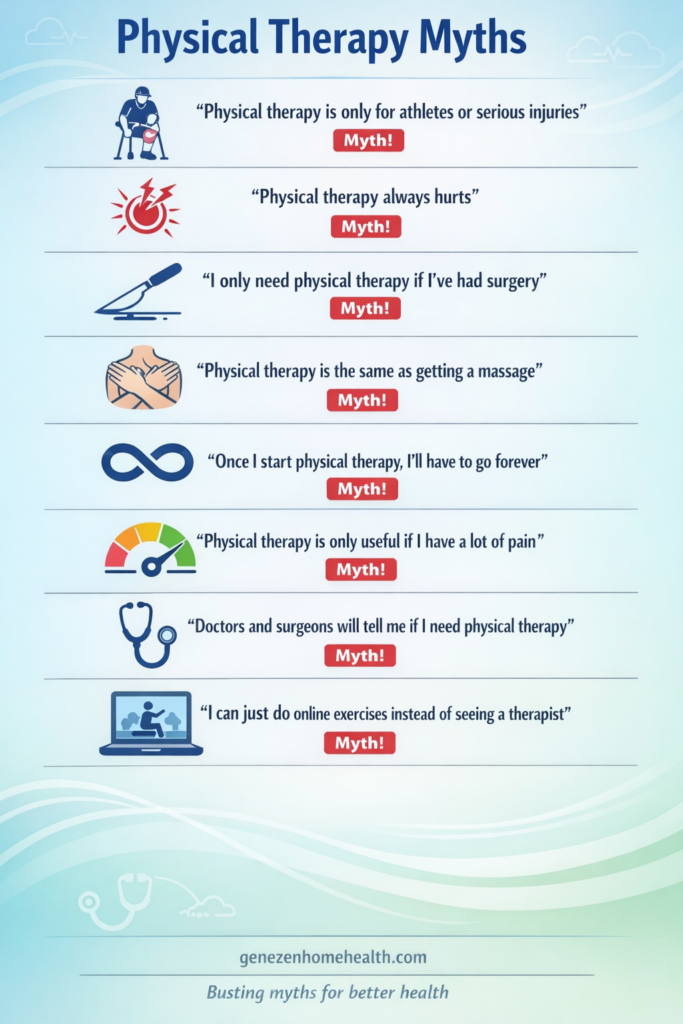
Physical Therapy Myths
Misinformation about physical therapy stops many patients from reaching out when they could benefit the most. Below are some of the most common physical therapy myths and the facts that counter them.
1. “Physical therapy is only for athletes or serious injuries”
This is one of the most widespread physical therapy myths. Many people picture physical therapy as a treatment used only by professional athletes recovering from dramatic sports injuries.
- Physical therapy is used for a wide range of conditions, including arthritis, back pain, post‑surgical recovery, balance issues, and age‑related mobility loss.
- Physical therapists work with people of all activity levels, from office workers to seniors living at home, not just competitive athletes.
- Early intervention can often prevent minor problems from turning into serious injuries, which is why physical therapy is not reserved for extreme cases.
Recognizing that physical therapy serves many different needs helps demystify physical therapy myths and makes it easier to consider as part of routine care.
2. “Physical therapy always hurts”
Another common physical therapy myth is that treatment is painful and will make you feel worse before you feel better. This belief can frighten people away from seeking help.
- While some exercises or stretches may cause mild discomfort, especially after an injury, the goal is to work within a safe and tolerable range.
- Therapists modify techniques, reduce intensity, or change positions if a patient feels significant pain.
- Many patients report that their pain actually decreases over time because movement improves circulation, reduces stiffness, and strengthens supporting muscles.
The idea that physical therapy must be painful is a myth that can be safely set aside once you understand how therapists prioritize comfort and safety.
3. “I only need physical therapy if I’ve had surgery”
A related physical therapy myth is that therapy is only necessary after an operation. Many people think their body can simply heal on its own without structured rehabilitation.
- Surgery is often followed by physical therapy, but many non‑surgical conditions also benefit from active rehabilitation.
- People recovering from sprains, strains, or repetitive‑use injuries can regain strength and motion more quickly with guided therapy than with rest alone.
- Physical therapy can also be used preventively, such as improving posture or balance before serious problems arise.
Physical therapy is not just a post‑surgical add‑on; it is a valuable tool that supports a wide spectrum of recovery and prevention.
4. “Physical therapy is the same as getting a massage”
Some patients assume that physical therapy is little more than a fancy massage, which is another persistent physical therapy myth. While hands‑on work can be part of treatment, it is only one component.
- Physical therapy also includes targeted exercises, education about movement and posture, and advice on daily activities such as lifting, walking, or sitting.
- Therapists may use techniques such as stretching, strengthening, balance training, and gait training rather than focusing solely on soft tissue work.
- The aim is to help you understand your body and improve function, not just to provide temporary pain relief.
Seeing physical therapy as a full‑body, education‑based approach helps separate it from the narrow idea that it is just a massage.
5. “Once I start physical therapy, I’ll have to go forever”

A common concern behind many physical therapy myths is that treatment is endless and will trap patients in a long‑term commitment.
- Most physical therapy programs are time‑limited and goal‑oriented, with a clear plan and expected duration.
- As you improve, the frequency of visits usually decreases, and the therapist may shift you to a more independent home program.
- Some people choose to return later for periodic check‑ins or tune‑ups, but this is optional and based on your needs and preferences.
The idea that physical therapy is a never‑ending commitment is simply untrue for the majority of patients.
6. “Physical therapy is only useful if I have a lot of pain”
Another barrier set up by physical therapy myths is the belief that therapy is only worth pursuing if your pain is severe.
- Many problems begin with mild discomfort or stiffness, and addressing them early can prevent the need for more aggressive treatments later.
- Physical therapists work with people who have subtle balance issues, gentle aches, or early‑stage joint problems, not just those in extreme pain.
- Early intervention can help you maintain mobility, avoid compensatory movement patterns, and reduce the risk of long‑term disability.
Waiting until pain is unbearable before starting physical therapy often leads to longer recovery times, which is the opposite of the intended outcome.
7. “Doctors and surgeons will tell me if I need physical therapy”
Many patients assume that they will only need physical therapy if a doctor explicitly recommends it, which becomes another limiting physical therapy myth.
- Some physicians may focus on medications or surgery and not routinely discuss physical therapy unless asked.
- In certain cases, patients can benefit from therapy even when a doctor has not mentioned it, especially for chronic pain, low back issues, or age‑related mobility decline.
- If you feel unsure about your recovery progress or notice persistent discomfort or stiffness, it is reasonable to ask whether physical therapy could help.
You do not have to wait for someone else to suggest physical therapy; you can proactively ask whether it might be appropriate for your situation.
8. “I can just do online exercises instead of seeing a therapist”
With the rise of home videos and fitness apps, some people believe that physical therapy is redundant if they can follow online exercises. This is another common physical therapy myth that can be misleading.
- Generic exercise videos do not take into account your specific condition, strength level, or movement patterns.
- A physical therapist can correct improper form, adjust intensity, and modify exercises if they cause pain or worsen symptoms.
- Personalized guidance and hands‑on feedback reduce the risk of further injury and increase the chances of meaningful progress.
While online resources can be helpful as supplements, they are not a complete replacement for professional, individualized physical therapy.
Why Believing in Physical Therapy Myths Is Costly
Holding on to physical therapy myths can have real consequences for your health and quality of life. Misconceptions often delay treatment, increase discomfort, and limit mobility more than necessary.
- Delaying therapy can allow minor issues to worsen, sometimes leading to more complex treatments such as stronger medications or surgery.
- Avoiding skilled evaluation can mean missing important red flags or subtle movement problems that simple interventions might have corrected.
- Unaddressed pain or stiffness can reduce participation in daily activities, work, and social life, indirectly affecting mental health and overall well‑being.
By confronting these myths, patients often discover that physical therapy is a valuable, flexible, and cost‑effective option rather than a last‑resort or unnecessary step.
How to Separate Physical Therapy Myths from Facts
Because so many physical therapy myths circulate among friends, family, and internet sources, it helps to know how to evaluate what you hear.
- Ask therapists direct questions about treatment plans, expected outcomes, and how long sessions are likely to last.
- Seek information from reputable medical or professional organizations, such as physical therapy associations or evidence‑based health sites.
- Compare second opinions when possible, especially before accepting strong negative beliefs about therapy.
Being curious and asking for evidence‑based explanations can help you dismantle physical therapy myths and replace them with realistic expectations.

Stop Letting Myths Hold You Back—Start Your Recovery Journey with Genezen Home Health
Now that you understand the truth behind common physical therapy myths, you can see how these misconceptions may have been secretly holding you back from getting the help you need. Physical therapy is a safe, adaptable, and often gentle way to improve how you move, reduce pain, and regain independence at any stage of life.
If you are ready to move past the myths and start a personalized recovery plan, Genezen Home Health Care Services offers professional, patient‑centered physical therapy in the comfort and safety of your own home. From post‑surgical rehabilitation to managing chronic pain or improving everyday mobility, their team can guide you through a tailored treatment program that fits your lifestyle and goals.
Schedule your first appointment with Genezen Home Health Care Services today and begin your journey toward a stronger, more active, and pain‑free life.