When a loved one comes home from the hospital but still needs ongoing treatment, families often feel a mix of relief and anxiety. Relief that they are no longer in a hospital setting — and anxiety about how to manage medical needs safely at home.
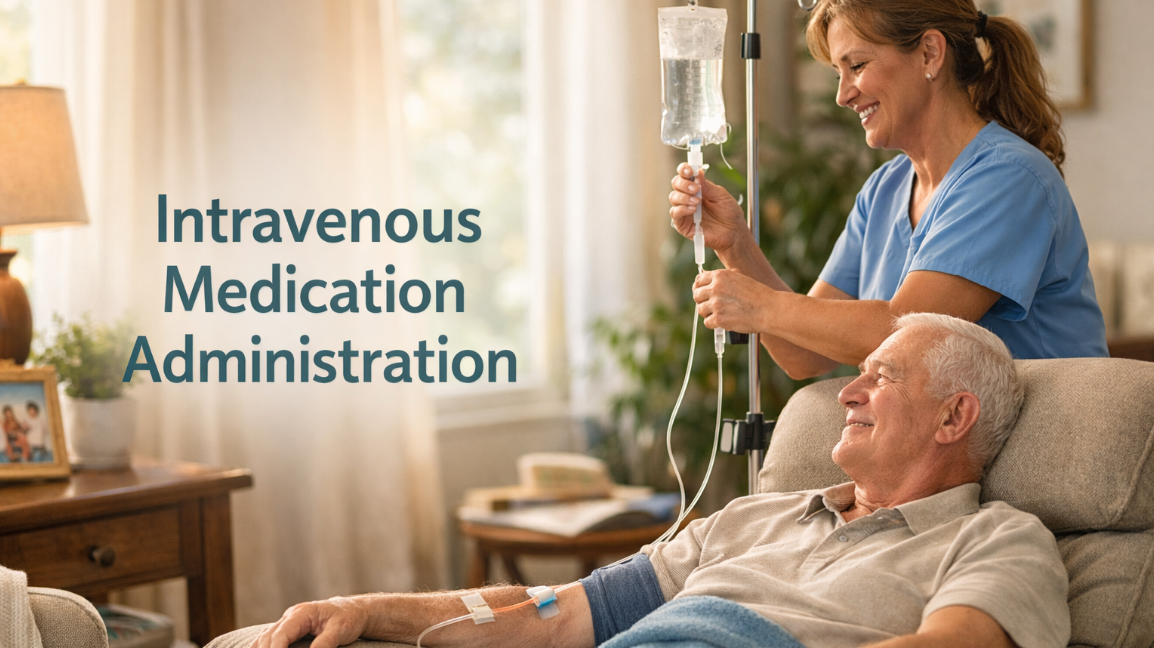
One of the most common concerns involves intravenous medication administration. Many people assume IV therapy can only happen inside a hospital. In reality, with the support of skilled nursing services, IV medication can be safely and effectively administered in the comfort of home.
If your family is facing this situation, here’s what you should know.
When Medication Needs Go Beyond Pills
Most of us are familiar with oral medications — pills, capsules, or liquids taken by mouth. But there are times when oral medication simply isn’t enough.
Some medications must work quickly. Others may not absorb properly through the digestive system. In certain cases, higher concentrations of medicine are needed to treat serious infections or manage complex conditions.
That’s where intravenous medication comes in.
IV therapy allows medication or fluids to be delivered directly into the bloodstream through a small, sterile tube placed into a vein. Because it bypasses the digestive system, the medicine works faster and more efficiently.
While this may sound intimidating, IV medication at home is a common and carefully managed service provided by skilled nurses.
What Is Intravenous (IV) Medication?
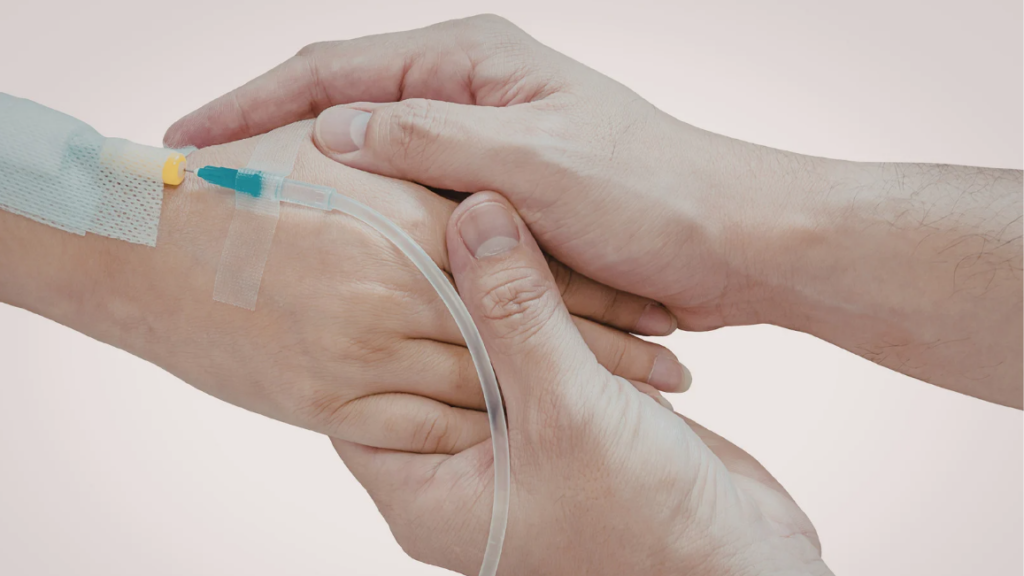
Intravenous medication is treatment delivered through a vein using a controlled, sterile system. It may be administered through:
- A standard IV line is placed in the arm
- A midline catheter
- A PICC line (a longer catheter placed in a larger vein for extended treatment)
The purpose is simple: to deliver medication, fluids, or nutrients directly into the bloodstream in a safe and measured way.
IV therapy is often prescribed for:
- Antibiotics for serious infections
- Hydration for dehydration
- Pain management
- Certain heart medications
- Chemotherapy or specialized treatments
- Nutritional support
The method may vary, but the goal remains the same — to support recovery and stabilize health.
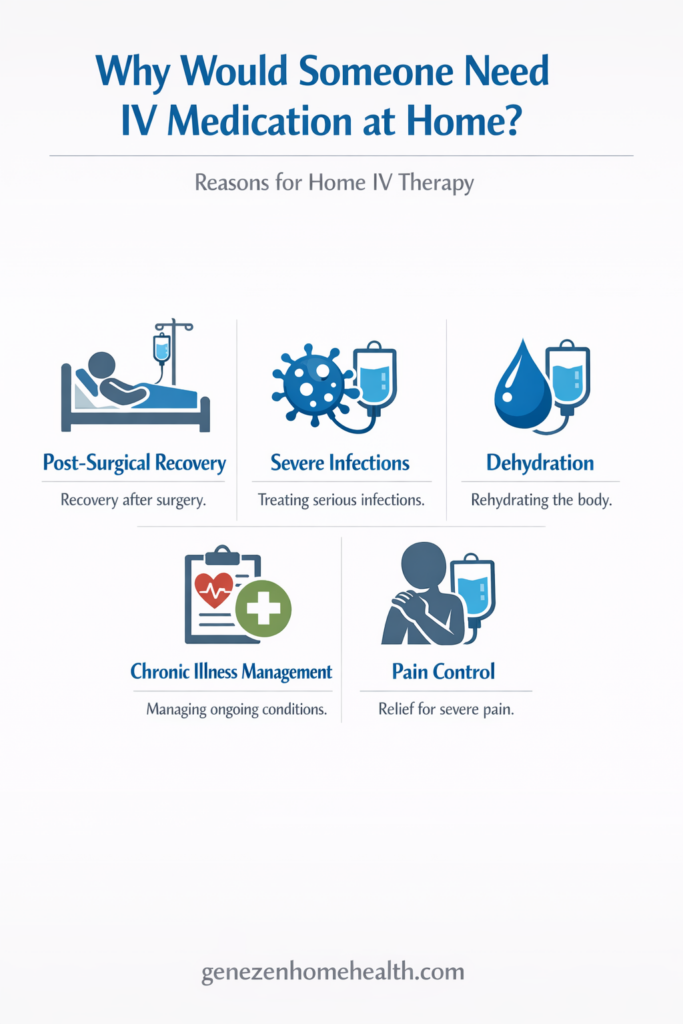
Why Would Someone Need IV Medication at Home?
Many patients who require IV therapy are transitioning from hospital to home. Others may have chronic conditions that flare up periodically and require more intensive treatment.
Common situations include:
1. Post-Surgical Recovery
After surgery, some patients need IV antibiotics to prevent or treat infection.
2. Severe Infections
Conditions like pneumonia, cellulitis, or bone infections often require strong antibiotics delivered intravenously.
3. Dehydration
Older adults or medically fragile individuals can become dehydrated quickly. IV fluids restore balance efficiently.
4. Chronic Illness Management
Certain autoimmune disorders, gastrointestinal diseases, and other chronic conditions may require periodic IV medications.
5. Pain Control
In some cases, IV pain management is part of a recovery plan.
The good news is that needing IV medication does not automatically mean extended hospitalization. With proper skilled nursing care, treatment can continue safely at home.
How Skilled Nurses Safely Administer IV Therapy at Home
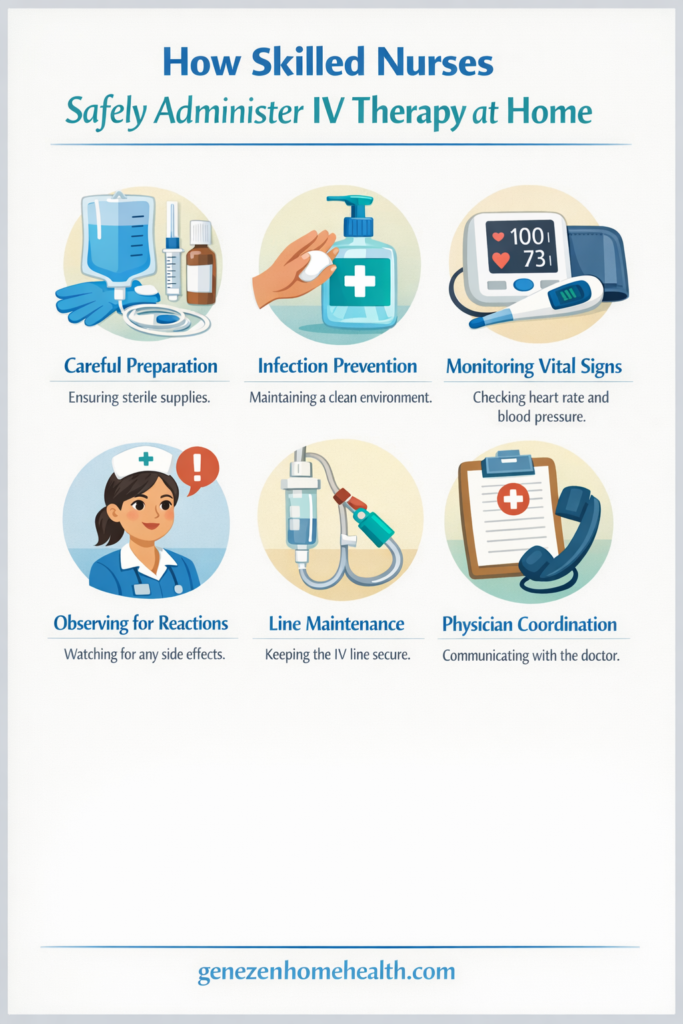
Safety is the foundation of home-based IV care. Skilled nurses are specially trained to manage intravenous medications and monitor patients closely throughout treatment.
Here’s what that typically involves:
Careful Preparation
Before starting therapy, the nurse reviews physician orders, verifies the correct medication and dosage, and prepares all equipment using sterile technique.
Infection Prevention
Strict hygiene protocols are followed to prevent infection. This includes disinfecting the IV site, using sterile supplies, and properly securing the line.
Monitoring Vital Signs
Blood pressure, heart rate, temperature, and oxygen levels are checked before, during, and after administration to ensure stability.
Observing for Reactions
While most IV medications are well tolerated, nurses watch for signs of allergic reactions, discomfort, or side effects.
Line Maintenance
Proper flushing and dressing changes keep IV lines functioning well and reduce complications.
Physician Coordination
If any concerns arise, the nurse communicates directly with the physician to adjust the care plan.
This hands-on, attentive care significantly reduces risks and gives families peace of mind.
The Benefits of Receiving IV Therapy at Home
Hospital care is sometimes necessary — but home offers something hospitals cannot: comfort, familiarity, and emotional security.
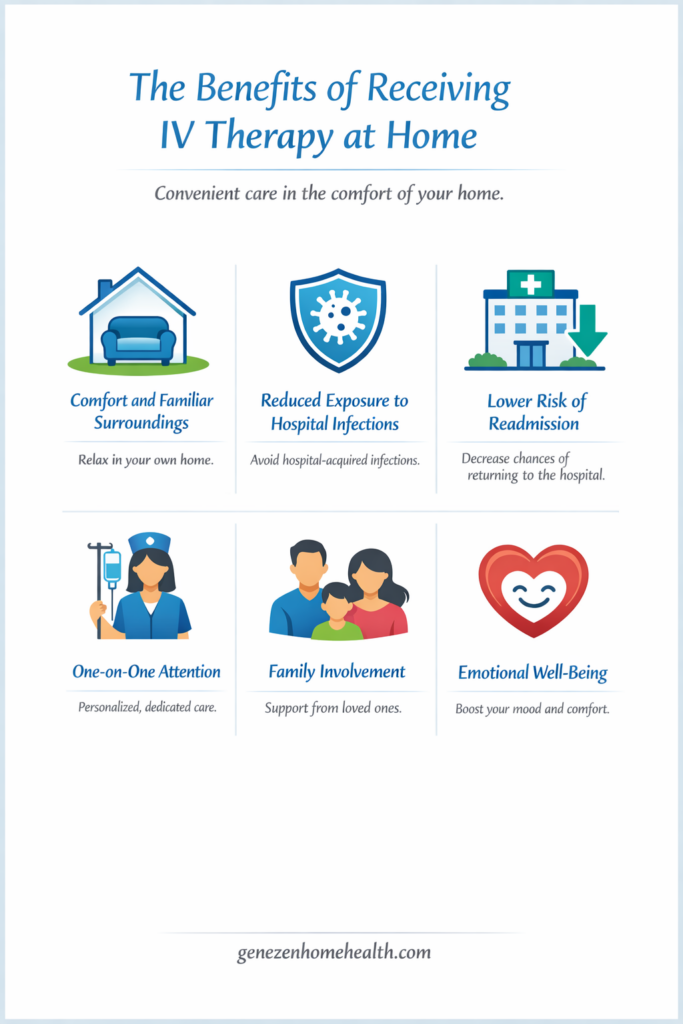
Here are some key benefits of IV therapy at home with skilled nursing support:
1. Comfort and Familiar Surroundings
Healing often feels easier when a person is in their own bed, surrounded by loved ones.
2. Reduced Exposure to Hospital Infections
Hospitals treat many acute illnesses. Receiving care at home reduces exposure to additional infections.
3. Lower Risk of Readmission
Consistent monitoring and professional oversight help detect problems early, preventing avoidable hospital returns.
4. One-on-One Attention
Unlike hospital settings where nurses care for multiple patients, home health nurses provide focused, individualized attention.
5. Family Involvement
Family members can stay informed, ask questions, and participate in care planning.
6. Emotional Well-Being
Recovery is not just physical. Being home often reduces stress, anxiety, and feelings of isolation.
For many families, this balance of professional care and personal comfort makes a significant difference in recovery outcomes.
Education and Support for Families
One of the most valuable aspects of skilled nursing services is education.
Families are not expected to manage IV care alone. Nurses provide clear, practical guidance that may include:
- Signs of infection at the IV site
- What symptoms require immediate attention
- How to keep the area clean and secure
- When to contact the nurse or physician
- Understanding medication schedules
Education builds confidence. Instead of feeling overwhelmed, families feel supported and informed.
Skilled nursing is not just about administering medication — it’s about empowering families to participate safely in recovery.
Addressing Common Concerns About Intravenous Medication Administration at Home
It’s completely normal to have questions. Here are answers to some common concerns:
Is IV medication safe at home?
Yes, when administered and monitored by licensed skilled nurses following proper protocols.
What if there’s a complication?
Nurses are trained to recognize early warning signs and respond quickly. They coordinate with physicians to adjust care as needed.
How do nurses prevent infection?
Through strict sterile techniques, regular dressing changes, and ongoing monitoring of the IV site.
What if my loved one is afraid of needles?
The initial placement of certain IV lines may occur in a hospital. Once in place, most patients find that maintenance is relatively comfortable. Nurses also provide reassurance and gentle care.
Will insurance cover IV therapy at home?
Coverage varies, but many insurance plans, including Medicare and private insurers, often cover medically necessary skilled nursing services.
Open communication with your healthcare provider can clarify eligibility and options.
Who Benefits Most from At-Home IV Skilled Nursing?
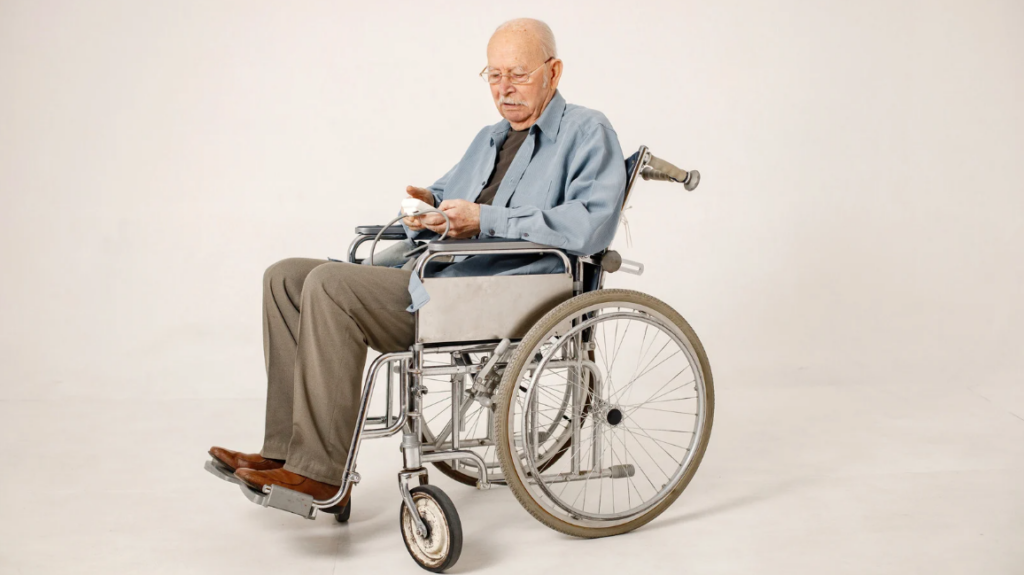
While IV therapy can support many patients, it is especially beneficial for:
- Seniors recovering from hospitalization
- Individuals managing chronic illnesses
- Patients requiring long-term antibiotic therapy
- Those with mobility challenges
- Individuals at higher risk for hospital-acquired infections
- Patients seeking end-of-life comfort care
In many cases, IV medication is just one component of a broader skilled nursing care plan that may also include:
- Wound care and dressing changes
- Diabetes management
- Catheter care
- Vital signs monitoring
- Medication management
- Chronic disease monitoring
This comprehensive approach supports overall recovery — not just a single treatment.
Preventing Hospital Readmissions Through Skilled Nursing
Hospital readmissions are common when patients return home without adequate support. Complications may go unnoticed until they become severe.
Skilled nursing services help bridge that gap by:
- Monitoring progress closely
- Catching early warning signs
- Ensuring medications are taken correctly
- Communicating with physicians
- Reinforcing follow-up care plans
This continuity of care significantly improves safety and recovery outcomes.
The Emotional Side of Healing at Home
Medical recovery isn’t just about medication. It’s also about confidence, dignity, and emotional reassurance.
For many patients, especially older adults, being home preserves a sense of independence. Familiar surroundings reduce stress. Family presence increases motivation.
Skilled nurses understand that healing involves the whole person — physical, emotional, and psychological well-being.
The result is not just clinical improvement, but a smoother and more compassionate recovery experience.
Making an Informed Decision

If your loved one has been prescribed intravenous medication, it’s important to ask:
- Can this treatment continue safely at home?
- Would skilled nursing support reduce the risk of complications?
- Will recovery improve in a more comfortable environment?
Discuss options with the physician and explore home-based skilled nursing services in your area.
Choosing skilled nursing does not mean replacing hospital care — it means extending professional care into the home setting where healing can continue safely and comfortably.
Compassionate Care, Right at Home
Intravenous medication administration may sound complex, but with proper skilled nursing support, it becomes a manageable and safe part of recovery.
Families do not have to navigate this alone. Professional nurses provide the clinical expertise, monitoring, and education needed to ensure treatment remains effective while allowing patients to rest and recover in familiar surroundings.
If your loved one requires IV medication or ongoing medical monitoring after hospitalization, skilled nursing services may provide the right balance of safety, support, and comfort.
To learn more about professional home-based skilled nursing services in Mission Viejo, CA, contact Genezen Home Health Care Services. Compassionate, personalized care is just a call away, helping families feel confident every step of the recovery journey.