

Communication is something most of us take for granted—until it becomes difficult. After a traumatic brain injury (TBI), even simple conversations can feel exhausting, confusing, or frustrating. Words may not come out clearly. Thoughts may feel scattered. Swallowing food or speaking loudly enough may suddenly become a challenge.
This is where traumatic brain injury and speech therapy intersect in powerful ways.
Speech therapy is not just about pronunciation. For individuals recovering from brain trauma, it plays a critical role in restoring communication, strengthening cognitive skills, and improving swallowing safety. Most importantly, it helps people reconnect with their world—one word, one conversation, one step at a time.
In this article, we’ll explore how speech therapy supports communication recovery after TBI and why early intervention can make a meaningful difference.
What Is a Traumatic Brain Injury?
A Traumatic Brain Injury (TBI) occurs when a sudden blow, jolt, or penetrating injury disrupts normal brain function. TBIs can range from mild (often referred to as concussions) to moderate or severe injuries that require extensive rehabilitation.
Common causes include:
- Falls
- Motor vehicle accidents
- Sports injuries
- Workplace accidents
- Physical assaults
While some people recover quickly from mild TBIs, others experience long-lasting effects—even when the injury was initially considered “minor.” The brain controls speech, language, memory, reasoning, and swallowing. When areas responsible for these functions are affected, communication can change dramatically.
Understanding how TBI impacts communication helps clarify why speech therapy is such an essential part of recovery.
How Traumatic Brain Injury Affects Communication
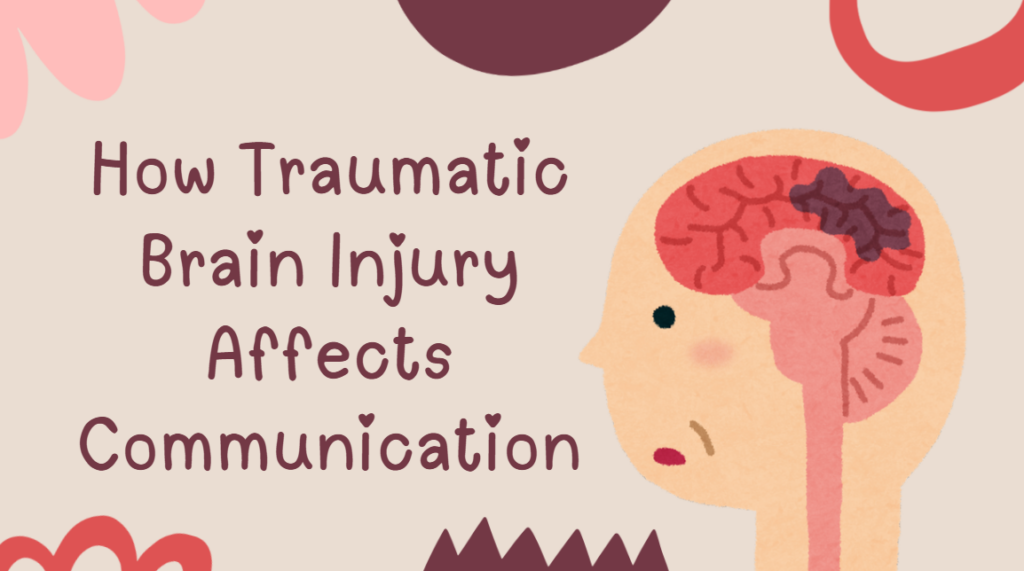
TBI can influence communication in several interconnected ways. These challenges may not always be immediately obvious but can significantly impact daily life.
Speech Production Problems
Some individuals develop dysarthria, a condition where muscle weakness or poor coordination affects speech clarity. Symptoms may include:
- Slurred speech
- Slow speech
- Difficulty controlling volume
- Trouble coordinating breathing and speaking
Even when the person knows exactly what they want to say, their speech may not come out clearly.
Language Difficulties
Language problems can also occur after a brain injury. Individuals may experience:
- Difficulty understanding spoken or written language
- Word-finding challenges
- Trouble forming complete sentences
- Replacing intended words with incorrect ones
These symptoms can resemble those seen in stroke survivors, where areas responsible for language processing are affected.
Cognitive-Communication Challenges
Cognitive-communication issues are extremely common after TBI. These occur when thinking skills interfere with communication. Examples include:
- Poor attention during conversations
- Memory lapses
- Difficulty organizing thoughts
- Struggling to stay on topic
- Trouble interpreting tone or social cues
A person may speak in a disorganized way, interrupt others, or misunderstand sarcasm. These changes can affect relationships and work performance.
Swallowing and Voice Changes
Speech-language pathologists also address swallowing disorders (dysphagia), which can occur after TBI. Symptoms may include:
- Coughing while eating or drinking
- Difficulty chewing
- Food “getting stuck”
- Risk of aspiration (food entering the airway)
Voice may also become hoarse, weak, or fatigued.
These communication and swallowing challenges are precisely where speech therapy becomes vital.
Traumatic Brain Injury and Speech Therapy
Speech therapy is provided by licensed speech-language pathologists (SLPs) trained to assess and treat communication and swallowing disorders.
After TBI, therapy focuses on:
- Improving speech clarity
- Restoring language skills
- Strengthening memory and attention
- Enhancing problem-solving and reasoning
- Supporting safe swallowing
Each treatment plan is personalized. No two brain injuries are identical, and recovery varies from person to person. A speech-language pathologist conducts a comprehensive evaluation and designs a program based on the individual’s specific needs and goals.
For some, therapy may focus heavily on speech muscles. For others, rebuilding cognitive-communication skills becomes the primary goal.
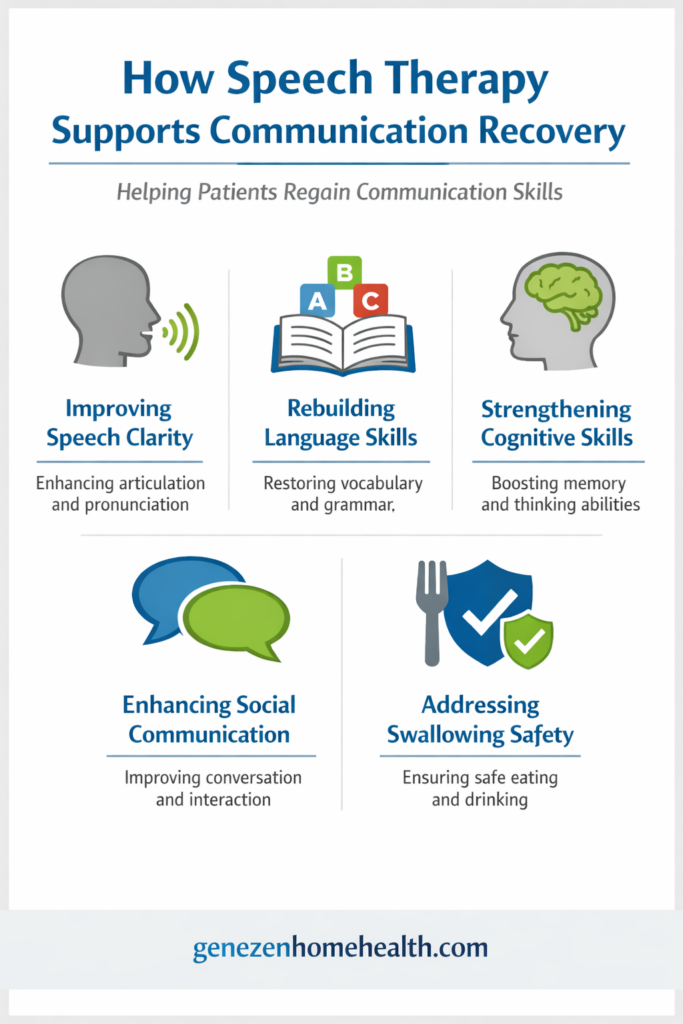
How Speech Therapy Supports Communication Recovery
The relationship between traumatic brain injury and speech therapy is centered on rebuilding lost skills and strengthening remaining abilities.
Here’s how therapy supports recovery:
1. Improving Speech Clarity
When muscle weakness affects speech, therapy may include:
- Oral motor strengthening exercises
- Breath support training
- Articulation drills
- Pacing strategies to slow speech
These exercises help improve coordination between breathing, voice production, and articulation, resulting in clearer speech.
2. Rebuilding Language Skills
If language comprehension or expression is impaired, therapy may focus on:
- Word-retrieval strategies
- Naming exercises
- Sentence construction tasks
- Following multi-step directions
SLPs often use structured activities that gradually increase in complexity to strengthen understanding and expression.
3. Strengthening Cognitive Skills
Cognitive rehabilitation is a major component of speech therapy after TBI. Therapy may target:
- Attention training exercises
- Memory recall strategies
- Organizational techniques
- Problem-solving activities
- Executive function tasks
Patients learn compensatory strategies such as using planners, note-taking systems, repetition techniques, and structured routines to improve daily functioning.
4. Enhancing Social Communication
Social communication can be one of the most challenging areas after brain injury. Therapy may address:
- Turn-taking in conversation
- Recognizing facial expressions
- Understanding tone and sarcasm
- Staying on topic
- Appropriate conversational boundaries
These skills are essential for rebuilding relationships and returning to work or community activities.
5. Addressing Swallowing Safety
When swallowing is affected, therapy includes:
- Exercises to strengthen swallowing muscles
- Safe swallowing positioning techniques
- Modifications to food textures and liquid consistency
- Strategies to prevent choking or aspiration
Safe swallowing is critical for overall health and preventing complications like pneumonia.
Recovery after TBI is often gradual. However, consistent therapy can lead to significant improvements over time.
Why Early Intervention Matters
The brain has a remarkable ability known as neuroplasticity—the capacity to reorganize and form new neural connections. Early speech therapy taps into this healing potential.
Starting therapy early can:
- Improve long-term communication outcomes
- Prevent secondary complications
- Reduce frustration and emotional distress
- Support faster reintegration into daily life
- Minimize caregiver burden
The sooner therapy begins, the sooner patients can start rebuilding essential skills.
The Emotional Impact of Communication Loss
Communication challenges after TBI often affect more than just speech. They can impact identity, independence, and emotional well-being.
Individuals may experience:
- Frustration
- Social withdrawal
- Anxiety
- Depression
- Loss of confidence
Struggling to express thoughts or follow conversations can lead to isolation. Relationships may become strained when misunderstandings occur.
Speech therapy helps restore not only communication skills but also dignity and self-expression. As clarity improves, so does confidence. As cognitive skills strengthen, independence returns.
Reclaiming communication often means reclaiming connection.
What to Expect from Home-Based Speech Therapy Services

Home-based therapy offers unique advantages for individuals recovering from TBI.
Receiving therapy at home:
- Provides comfort in a familiar environment
- Reduces transportation challenges
- Allows therapy to address real-life communication situations
- Encourages family involvement
- Supports personalized care
Practicing communication skills in everyday settings—like during meals, phone calls, or family conversations—can enhance carryover and make therapy more meaningful.
Home health services also allow therapists to assess environmental factors that may impact communication or swallowing safety.
Final Thoughts: Supporting Recovery After Traumatic Brain Injury
The connection between traumatic brain injury and speech therapy is profound. TBI can disrupt speech, language, memory, attention, and swallowing—core abilities that shape daily life. But with proper intervention, recovery is possible.
Speech therapy addresses far more than pronunciation. It strengthens thinking skills, restores clarity, improves safety, and rebuilds confidence. Early intervention maximizes the brain’s healing potential and supports meaningful progress.
If you or a loved one is experiencing communication challenges after a traumatic brain injury, professional support can make a significant difference.
Genezen Home Health Care Services provides compassionate, personalized in-home speech therapy designed to support recovery in a comfortable and familiar environment. Their skilled professionals understand the complex effects of brain injury and work closely with patients and families to promote safe, effective communication rehabilitation.
Taking the first step toward recovery can feel overwhelming—but you don’t have to navigate it alone.Contact Genezen Home Health Care today to learn more about how in-home speech therapy can support communication recovery and help restore confidence, independence, and connection.