

Speech and language therapy for dysarthria plays a pivotal role in helping individuals reclaim clearer, more confident communication. Dysarthria is a motor speech disorder that affects a person’s ability to articulate words due to weakness, reduced coordination, or impaired control of the speech muscles—including the lips, tongue, vocal cords, and diaphragm. As a result, speech may become slurred, slow, or difficult to understand, creating daily communication challenges.
Dysarthria can stem from various neurological conditions, injuries, or medical events, and its impact on speech varies widely. Because of this, early evaluation and a tailored treatment plan are essential. Speech and language therapy provides focused exercises, techniques, and communication strategies that strengthen speech production, enhance clarity, and support meaningful interaction. In this guide, we’ll break down what dysarthria is, its symptoms, causes, types, and the best treatment approaches.
What Is Dysarthria?
Dysarthria is classified as a motor speech disorder, which means it originates from neurological damage that impairs the muscles used in speaking. Unlike language disorders, where the brain has difficulty processing or understanding language, dysarthria affects the physical act of producing speech.
Common challenges include:
- Slurred or mumbled speech
- Monotone or uneven voice
- Reduced volume or vocal projection
- Difficulty pronouncing consonants and vowels clearly
Because speech involves complex coordination of multiple muscles, even minor impairments can affect clarity and intelligibility. Dysarthria can affect people of all ages and may be temporary, progressive, or permanent depending on the underlying cause.
The Six Types of Dysarthria
Dysarthria is classified into six primary types, each associated with different neurological causes. Understanding the type can guide treatment and therapy strategies:
1. Flaccid Dysarthria
- Caused by weak muscle tone, often from nerve damage.
- Speech may be breathy, soft, or nasal.
- Common in conditions like myasthenia gravis or cranial nerve injury.
2. Spastic Dysarthria
- Results from stiff muscles caused by brain or spinal cord damage.
- Speech is slow, strained, and sometimes harsh-sounding.
- Often seen in stroke or cerebral palsy.
3. Ataxic Dysarthria
- Caused by cerebellar dysfunction affecting coordination.
- Speech may be slurred, uneven, or “drunken” in rhythm.
- Often associated with multiple sclerosis or cerebellar stroke.
4. Hypokinetic Dysarthria
- Characterized by reduced movement, leading to quiet, monotone speech.
- Common in Parkinson’s disease.
5. Hyperkinetic Dysarthria
- Speech is affected by involuntary movements, resulting in variable pitch, loudness, and articulation.
- Seen in Huntington’s disease or other movement disorders.
6. Mixed Dysarthria
- A combination of types, often caused by conditions such as amyotrophic lateral sclerosis (ALS) or multiple strokes.
- Treatment is more complex and tailored to the dominant symptoms.
What Are the Symptoms of Dysarthria?
Symptoms of dysarthria can vary based on type and severity, but common signs include:
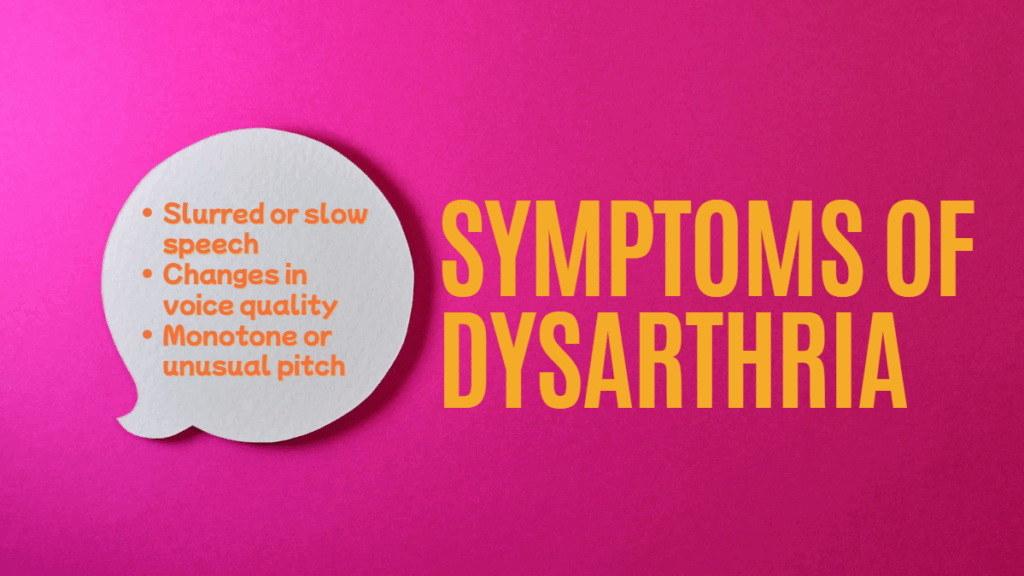
- Slurred or slow speech: Words may blend together, making them hard to understand.
- Changes in voice quality: Speech may sound soft, nasal, breathy, or harsh.
- Monotone or unusual pitch: Difficulty modulating tone, resulting in flat speech.
- Articulation errors: Mispronouncing consonants or vowels.
- Difficulty controlling rate: Speech may be abnormally fast, slow, or uneven.
Non-speech symptoms may also appear, such as drooling, trouble chewing or swallowing, and fatigue while speaking. Dysarthria can affect self-confidence, social interactions, and overall quality of life if not addressed.
What Causes Dysarthria?
Dysarthria stems from neurological, traumatic, or degenerative conditions that impair the muscles used for speech. Common causes include:
- Neurological disorders: Stroke, Parkinson’s disease, multiple sclerosis, ALS.
- Brain or spinal cord injuries: Trauma or surgery affecting speech centers.
- Infections or tumors: Conditions that damage nerves or brain regions responsible for speech.
- Progressive diseases: Conditions like Huntington’s disease that worsen over time.
Understanding the underlying cause is critical for effective therapy. For instance, treatment after a stroke may emphasize muscle recovery and strengthening, while therapy for Parkinson’s-related dysarthria may focus more on compensatory techniques and communication support. In all cases, speech and language therapy for dysarthria provides the structured, personalized approach needed to address each individual’s unique challenges.
Complications of Dysarthria
Dysarthria can have both physical and emotional impacts:
- Communication challenges: Slurred speech may make social interactions frustrating.
- Emotional effects: Anxiety, depression, or social withdrawal may develop.
- Daily life limitations: Difficulty at work, school, or in routine tasks.
- Swallowing difficulties: In some cases, dysarthria co-occurs with dysphagia, leading to nutrition concerns.
Comprehensive management, including speech therapy, assistive devices, and social support, can reduce these complications and improve quality of life.
How Is Dysarthria Diagnosed?
Diagnosis typically begins with a comprehensive evaluation conducted as part of speech and language therapy for dysarthria, led by a licensed speech-language pathologist (SLP).
- Oral-motor examination: Checks muscle strength and coordination to guide speech and language therapy for dysarthria.
- Medical history review: Identifying underlying neurological or medical conditions.
- Imaging and neurological assessments: MRI, CT, or other tests to identify brain or nerve damage.
- Speech intelligibility tests: Measures how understandable speech is, helping refine speech and language therapy for dysarthria.
In many cases, a multidisciplinary team—including neurologists, occupational therapists, and SLPs—ensures a holistic evaluation. Early diagnosis is critical for maximizing therapy outcomes.
How Is Dysarthria Treated?
Speech and language therapy for dysarthria is the cornerstone of treatment, offering targeted techniques to improve communication based on the condition’s type, severity, and underlying cause.
1. Articulation and Pronunciation Exercises
- Focus on precision of consonants and vowels.
- Repetition and over-articulation help strengthen muscle memory.
2. Breath Support and Voice Control
- Breathing exercises improve volume and speech endurance.
- Vocal exercises enhance pitch, tone, and clarity.
3. Rate and Rhythm Control
- Techniques include pausing between phrases and pacing exercises.
- Helps maintain understandable speech despite muscle weakness.
4. Alternative and Augmentative Communication (AAC)
- Includes communication boards, speech-generating devices, or apps.
- Useful for severe cases where verbal communication is extremely limited.
5. Home Practice
- Daily exercises recommended by an SLP reinforce therapy.
- Encouraging consistent practice accelerates improvement.
Speech therapy is often combined with medical treatment for underlying conditions, such as medications for Parkinson’s or post-stroke rehabilitation.
When Should You See a Healthcare Provider About Dysarthria?

If you’re experiencing speech changes that are sudden, persistent, or affecting daily communication, it may be time to consider an evaluation through speech and language therapy for dysarthria.
- Sudden slurred or difficult speech, which may indicate a stroke or neurological emergency.
- Gradual changes affecting daily communication.
- Other neurological symptoms, such as weakness, numbness, or coordination problems.
- Speech fatigue that worsens as you talk or difficulty controlling your breath while speaking.
- A new difficulty forming words after an injury, illness, or medication change.
- Trouble being understood by people who normally have no difficulty interpreting your speech.
- Persistent hoarseness, vocal strain, or changes in vocal quality that accompany your speech difficulties.
Early intervention is key. Speech therapy can help prevent communication breakdowns and maintain social engagement.
Tips for Speaking with Dysarthria
Individuals with dysarthria can adopt practical strategies to enhance communication and reduce frustration during conversations:
- Speak slowly and clearly – pacing helps intelligibility, giving your listener more time to process each word and sound.
- Use breath support – deep, controlled breaths improve vocal volume and stability, allowing you to finish sentences without strain.
- Over-articulate difficult words – emphasizing consonants and vowels makes speech sounds sharper and more precise, boosting clarity.
- Use short sentences and pauses – breaking speech into manageable chunks keeps messages easier to follow and reduces fatigue.
- Use assistive devices – apps or communication boards can supplement speech when fatigue sets in or communication becomes challenging.
Regular practice, patience, and ongoing guidance from an SLP can make these strategies highly effective in daily communication.
Tips for Others Communicating with Someone with Dysarthria
Friends, family, and colleagues can support people with dysarthria through simple, thoughtful strategies that make conversations smoother and more respectful:
- Be patient – allow extra time for responses so the person can express themselves without pressure or interruption.
- Maintain eye contact – stay focused on the speaker rather than finishing their sentences, which preserves their independence and dignity.
- Reduce background noise – minimizing environmental distractions makes it easier to hear and understand speech cues.
- Ask clarifying questions respectfully – if you don’t understand, seek clarification gently and without showing frustration.
- Encourage alternative communication – support the use of devices, gestures, or written tools when they help the person communicate more comfortably.
Creating a supportive environment fosters confidence and reduces social anxiety for individuals with dysarthria.
Conclusion
Dysarthria can deeply affect speech and everyday communication, but meaningful improvement is possible with early intervention and the right support. Through speech and language therapy for dysarthria, individuals can strengthen their speech muscles, enhance clarity, and rebuild confidence in their ability to express themselves. With tailored strategies and ongoing guidance, many people experience significant progress and a renewed sense of connection in daily life.
At Genezen Home Health Care, our licensed speech-language pathologists offer personalized therapy for dysarthria. We focus on practical exercises, communication strategies, and ongoing support to help patients thrive in daily life. If you or a loved one is experiencing speech challenges, reach out to Genezen Home Health Care to explore professional guidance and compassionate care.Contact Genezen Home Health Care today to schedule an evaluation and start your journey toward clearer communication.