


When a loved one needs extra help at home, families often face an important question: What type of support is best — home health care or home care? At first, the terms sound similar, but they refer to distinct types of services with different goals, providers, and coverage. Understanding home health care vs home care helps families make confident decisions about which service fits their unique needs, health conditions, and long-term goals.
In this guide, we’ll explore what each service involves, how they differ, who benefits most from each, and how to choose the right support at home.
Home Health Care: Professional Medical Care Delivered at Home
Home health care refers to medical or clinical services delivered in the comfort of one’s home. It is prescribed by a physician and typically administered by licensed professionals such as registered nurses, physical therapists, occupational therapists, or medical social workers. These services help patients recover from illness, injury, or surgery while remaining in familiar surroundings.
The Purpose of Home Health Care
The primary goal of home health care is recovery and rehabilitation. It supports patients who may otherwise require hospitalization or extended stays in assisted facilities. Through coordinated care plans, home health professionals monitor progress, manage chronic conditions, and help patients regain independence.
Common Home Health Care Services
Home health care can cover a wide range of clinical services, including:
- Skilled nursing (wound care, IV therapy, medication administration)
- Physical therapy and occupational therapy
- Speech therapy
- Post-surgical rehabilitation
- Chronic disease and pain management
- Medical social services and patient education
Each service is tailored to the individual’s diagnosis and care plan, usually under the supervision of a registered nurse or physician.
Who Provides Home Health Care
Home health care is provided by medically licensed professionals who operate under regulated healthcare standards. A nurse may visit the home regularly to check vitals or administer medication, while therapists develop personalized programs to restore movement or speech. The presence of skilled professionals ensures patients receive appropriate, safe, and evidence-based treatment.
Home Care: Non-Medical Support for Daily Living

While home health care involves medical treatment, home care focuses on non-medical support. It centers on assisting individuals with daily living activities to maintain comfort, safety, and independence at home. Unlike home health care, these services don’t require a doctor’s order and are often initiated by families seeking supportive companionship or personal assistance.
The Purpose of Home Care
The main goal of home care is to improve quality of life rather than treat medical conditions. It’s ideal for seniors or individuals who need help with day-to-day tasks but don’t require clinical care. Home care emphasizes emotional support, companionship, and building a stable routine.
Common Home Care Services
Typical home care services include:
- Assistance with bathing, grooming, and personal hygiene
- Meal preparation and light housekeeping
- Medication reminders (not administration)
- Companionship and emotional support
- Transportation to appointments
- Mobility assistance and safety supervision
Most home care providers are trained caregivers or nursing aides—but not licensed medical professionals—so they’re best suited for daily living support rather than clinical tasks.
Who Provides Home Care
Caregivers in home care typically work through private agencies, home service companies, or as privately hired aides. They don’t perform medical procedures but play a vital role in helping clients maintain dignity and independence. Their consistent presence also provides family members with peace of mind.
Home Health Care vs Home Care: Key Differences
At first glance, both options seem similar—they both take place at home and aim to improve quality of life—but the difference lies in what kind of care is delivered, who provides it, and why it’s needed.
Below is an overview comparing home health care vs home care side by side:
| Factor | Home Health Care | Home Care |
| Type of Service | Clinical or medical care | Non-medical, personal support |
| Provider Qualifications | Licensed nurses, therapists, medical professionals | Trained caregivers or home aides |
| Requires Physician’s Order | Yes | No |
| Primary Goal | Recovery, rehabilitation, or medical management | Comfort, independence, and companionship |
| Setting | Patient’s home | Patient’s home |
| Length of Care | Often short-term or condition-based | Long-term or ongoing support |
| Payment Options | May be covered by Medicare, insurance, or health plans | Usually private pay or long-term insurance |
| Examples of Services | Wound care, IV therapy, rehabilitation, physical therapy | Bathing assistance, meal prep, light housekeeping |
Understanding these distinctions can help families align the right service with their loved one’s current health status and long-term goals.
When to Consider Home Health Care
You might choose home health care when your loved one needs medical attention but doesn’t require a hospital stay. Doctors often prescribe it after hospitalization, surgery, or a major health event such as a stroke.
Here are examples of when home health care may be appropriate:
- A senior recovering from hip replacement needing physical therapy
- Someone requiring IV medications or wound care at home
- A patient with a chronic illness needing periodic monitoring
- A person experiencing speech or mobility challenges following a stroke
Home health care helps patients recover safely in familiar surroundings, keeping them close to family while receiving professional care.
When to Consider Home Care
Home care becomes essential when the challenge is not medical but related to daily living. It’s ideal for seniors or disabled individuals who can manage their health but need help with routine tasks.
Situations that call for home care include:
- Elderly parents needing assistance with grooming or cooking
- Someone wanting companion visits to battle isolation
- Individuals recovering from minor surgeries but not needing medical oversight
- People with disabilities needing support navigating household activities
Home care doesn’t replace medical visits but complements them by ensuring daily comfort, emotional support, and a consistent routine at home.
Can You Combine Both Services?

Yes, and many families do. In fact, combining both services often provides the best long-term results. For example, a patient recovering from surgery might need home health care initially for wound management and physical therapy. As their condition stabilizes, they may transition to home care for ongoing assistance with meal preparation or mobility.
The two services work best together when coordinated by a skilled, professional agency. The medical team can communicate with home aides to ensure the patient’s environment supports their recovery goals.
How to Choose the Right Service for Your Loved One
Making the right decision requires understanding your loved one’s current condition, care goals, and physician recommendations. Here’s a short guide to help you choose:
- Evaluate Their Health Needs: Consider whether they need medical care (nursing, therapy, medication management) or non-medical support (companionship, daily tasks).
- Consult with Their Doctor: A physician can clarify whether home health services are medically necessary or whether simple home assistance suffices.
- Consider Duration and Frequency: Is the care temporary (e.g., recovery after surgery) or ongoing (e.g., aging support)?
- Review Budget and Coverage Options: Home health care is often covered under insurance, while home care may be private pay. Knowing coverage limits helps plan financially.
- Interview Agencies Carefully: Ask about licensing, training, and care coordination. Reliable agencies explain their roles clearly and provide transparent pricing.
Making an informed decision ensures your loved one receives safe, effective, and compassionate care – whether that involves skilled medical attention, supportive daily assistance, or a blend of both.
Benefits of Receiving Care at Home
Regardless of whether you choose home health care or home care, both share a vital benefit — patients stay in the comfort of their own homes. Being surrounded by familiar routines and loved ones supports emotional well-being, promotes faster recovery, and reduces stress compared to institutional settings.
Home-based services also offer flexibility. Family members stay involved, schedules are personalized, and care plans can evolve with changing needs. For many families, the greatest advantage is peace of mind — knowing their loved one receives expert care while maintaining independence.
Common Misconceptions About Home Health Care and Home Care
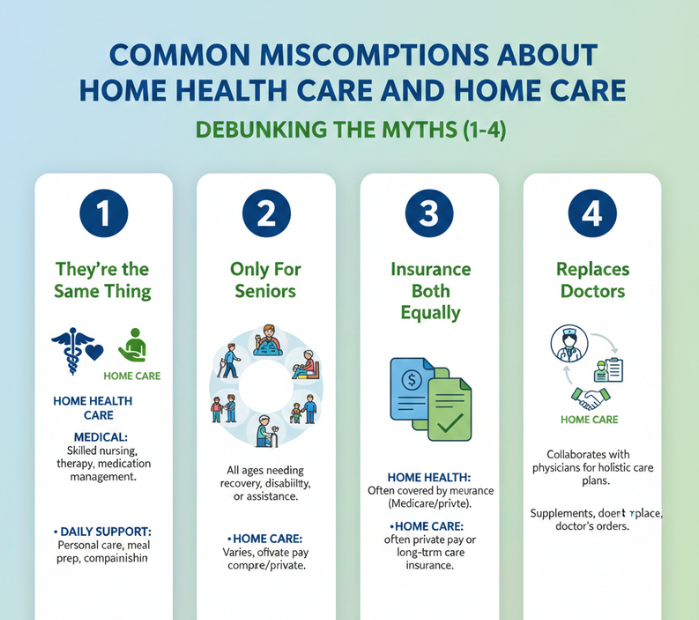
1. They’re the Same Thing.
This is one of the biggest myths. Home health care provides medical treatment, while home care focuses on day-to-day living support.
2. Home Care is Only for Seniors.
While many clients are elderly, home care also benefits younger adults recovering from accidents or living with disabilities.
3. Insurance Covers Both Equally.
Insurance often covers home health care under prescribed circumstances, but home care is usually paid out-of-pocket unless covered by long-term care insurance.
4. Home Health Care Replaces Doctors.
It complements, not replaces, clinical oversight. Nurses and therapists work under physicians’ guidance to ensure accurate and safe care.
Clarifying these misconceptions helps families understand how both services function independently yet complement each other to support holistic well-being.
Final Thoughts
Navigating the decision between home health care vs home care may seem overwhelming, but understanding the purpose of each simplifies the process. Home health care is best suited for individuals with medical conditions requiring professional supervision, while home care is ideal for those needing help with everyday activities and companionship. Each plays an essential role in promoting independence, dignity, and safety at home.
At Genezen Home Health Care Services, Inc., we believe every patient deserves both professional skill and genuine compassion. Whether your loved one requires skilled medical care or daily living assistance, Genezen’s dedicated team of nurses, therapists, and home aides is ready to guide you every step of the way. Contact us today to learn how our integrated care approach helps families find peace of mind and the best possible support—right at home.