


Choosing a speech therapist can feel overwhelming. With so many providers, settings, and approaches, it’s natural to wonder if you’ll find the right fit — someone who not only has the expertise but also the patience, communication style, and personal approach that aligns with your needs. Whether you’re looking for support for yourself, a child, or a loved one recovering from illness or injury, making the right choice can make all the difference in progress, confidence, and long-term outcomes.
This guide will walk you through what to consider when choosing a speech therapist, helping you make a confident, informed decision for yourself or your family.
Why Choosing the Right Speech Therapist Matters
The right speech therapist can be transformative. While therapy techniques and exercises are critical, the provider’s approach, communication style, and consistency directly affect the results. A skilled therapist creates a safe and supportive environment, provides clear explanations, and sets measurable goals that keep patients motivated.
When the therapist is a good fit, patients are more likely to attend sessions consistently, engage actively, and feel empowered in their recovery journey. On the other hand, a mismatch in approach or personality can lead to frustration, stagnation, and decreased confidence — even if the therapist is technically qualified.
Choosing the right provider isn’t just about credentials; it’s about finding a professional who aligns with your needs, values, and expectations. Understanding what to evaluate in a therapist helps ensure your therapy experience is effective, comfortable, and goal-focused.
Professional Qualifications and Standards to Look For

Licensure:
- Speech-language pathologists (SLPs) must hold a state license to practice in the U.S.
- Ensures therapists meet rigorous education and competency standards.
Certification:
- Many therapists hold a Certificate of Clinical Competence (CCC) from the American Speech-Language-Hearing Association.
- Indicates adherence to national best practices and ethical guidelines.
Continuing Education:
- Therapists who stay current with research and therapy techniques demonstrate commitment to high-quality care.
Ethical Practice:
- Licensed and certified SLPs follow professional guidelines designed to protect patient safety, confidentiality, and overall well-being.
Why It Matters:
- Verifying credentials reduces the risk of ineffective or unsafe care.
- Credentials provide a baseline for quality, accountability, and professional expertise, though they don’t guarantee a perfect match.
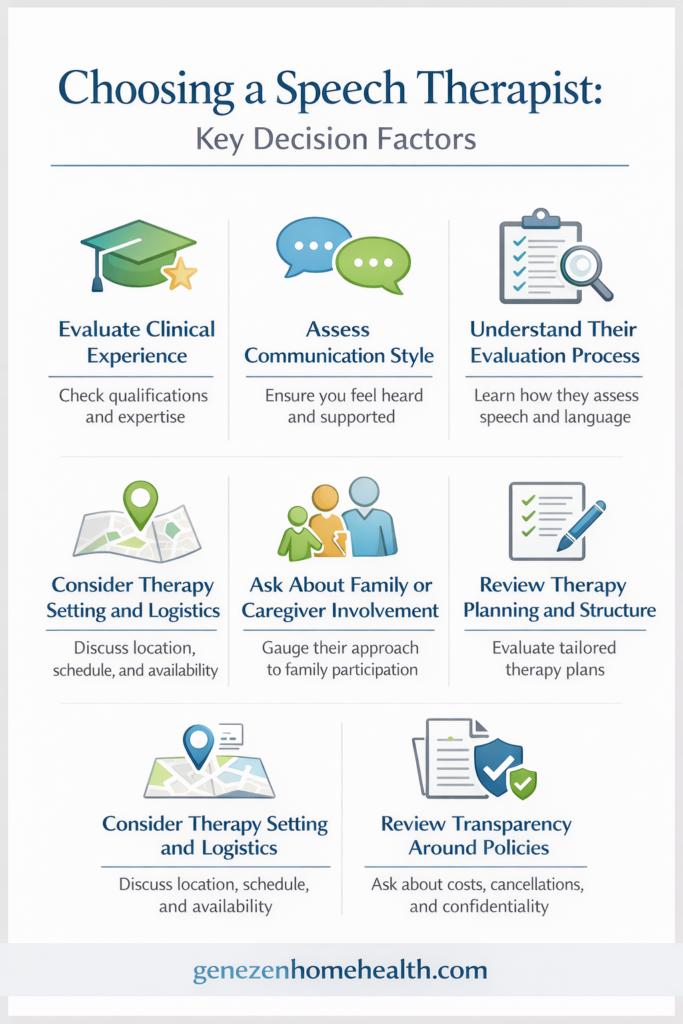
Choosing a Speech Therapist: Key Decision Factors

Finding the right therapist involves more than looking at a certificate on the wall. Below are seven critical factors to guide your decision.
1. Evaluate Clinical Experience
Experience matters. Ask about the therapist’s years of practice and whether they have worked with your specific age group — children, adults, or seniors. If home-based therapy is important to you, confirm the therapist has experience delivering in-home sessions.
Therapists who have worked in rehabilitation, hospitals, or multidisciplinary teams often bring additional insight, particularly for patients recovering from brain injuries, strokes, or neurological conditions. Experience ensures the therapist can adapt strategies to unique challenges and patient personalities.
2. Assess Communication Style
A speech therapist’s communication style can make or break the therapy experience. Look for someone who explains assessments, treatment plans, and goals clearly and patiently. Progress updates should be regular and transparent, helping patients and caregivers understand achievements and next steps.
The best therapists listen attentively, answer questions without judgment, and involve patients and families in decision-making. Professionalism combined with empathy fosters a collaborative environment where patients feel safe, heard, and motivated.
3. Understand Their Evaluation Process
Before beginning therapy, a thorough evaluation is essential. Ask what the initial assessment entails and how goals are determined. Does the therapist use standardized tools to measure speech, language, and cognitive skills? How long before therapy starts after evaluation?
A detailed evaluation ensures the therapy plan addresses real challenges and sets realistic, measurable objectives. It also signals whether the therapist takes a structured and thoughtful approach rather than relying on generic exercises.
4. Review Therapy Planning and Structure
Every patient’s needs are different, and therapy should reflect that. Confirm that the therapist provides individualized treatment plans, structured sessions, and clear documentation of progress.
Ask how goals are tracked and adjusted if progress slows. A therapist who is flexible yet organized can modify strategies without compromising outcomes. Structured planning keeps patients on track and ensures every session has a purpose.
5. Consider Therapy Setting and Logistics
Deciding between home-based and clinic-based therapy depends on lifestyle, convenience, and comfort.
- Reduces travel stress
- Allows therapy in real-life settings
- Encourages family participation
- Improves comfort and accessibility
Clinic-Based Therapy:
- Provides specialized equipment
- Offers a controlled environment for focused practice
- Enables exposure to social interaction in group therapy sessions
Choosing the setting that fits your schedule and lifestyle can improve attendance, engagement, and overall satisfaction with therapy.
6. Ask About Family or Caregiver Involvement
Family involvement often enhances therapy outcomes. Confirm whether caregivers are educated on exercises, strategies, or communication techniques to practice between sessions. Understanding expectations and how families can contribute to progress ensures therapy continues outside of appointments.
A therapist who provides clear guidance for at-home support fosters collaboration and accelerates recovery.
7. Review Transparency Around Policies
Practical factors like scheduling, cancellation policies, and insurance acceptance matter. Understanding these details up front prevents misunderstandings and ensures therapy remains consistent. Ask about documentation practices, payment structure, and any potential hidden fees.
Transparency demonstrates professionalism and reinforces confidence in the therapist’s reliability.
Red Flags and How to Avoid Common Pitfalls
Even when a therapist appears qualified, certain warning signs can indicate a poor fit. Being aware of red flags helps you make an informed decision:
- Lack of a clear treatment plan: Sessions should have defined goals and strategies.
- Unclear communication: If explanations are confusing or progress is not reported, this can hinder your confidence.
- Inconsistent scheduling: Frequent rescheduling or no-shows can disrupt progress.
- Dismissive attitude: Patients and families should feel heard; dismissive behavior is a warning sign.
- No measurable outcomes: Therapy should track progress in tangible ways.
Recognizing these pitfalls early ensures your therapy experience is structured, effective, and supportive.
Building Trust, Comfort, and Long-Term Partnership
Choosing a speech therapist is more than checking boxes. Emotional comfort and trust are critical. Patients should feel respected, heard, and culturally understood. Rapport influences engagement and motivates patients to practice new skills consistently.
Professionalism, reliability, and empathy create a foundation where therapy becomes a partnership. The therapist should feel approachable, supportive, and encouraging, while maintaining boundaries that ensure a productive, goal-focused relationship.
When trust is present, patients are more likely to follow through with therapy, participate fully, and achieve meaningful results.
How to Prepare for Your First Consultation

Preparation can make the first consultation more productive and less stressful. Consider these tips:
- Bring relevant information: Include medical history, previous evaluations, and any concerns you want addressed.
- Prepare questions to ask the Speech Therapist: Ask about credentials, evaluation methods, therapy structure, and how progress is measured.
- Observe interaction style: Note how the therapist communicates with the patient, explains goals, and involves family.
- Clarify expectations: Understand session frequency, duration, home practice requirements, and follow-up procedures.
- Take notes: Writing down answers ensures you remember key details and can compare providers if needed.
A prepared consultation helps you feel confident in evaluating whether the therapist is a good fit, making the decision-making process smoother.
Final Thoughts: Making a Confident, Informed Decision
Choosing a speech therapist is a significant decision, but it doesn’t have to be overwhelming. Focusing on key factors — credentials, experience, communication style, evaluation and treatment planning, therapy setting, family involvement, and transparency — empowers you to make an informed choice.
Therapy is most effective when expertise meets comfort, trust, and clear communication. Asking questions, observing interactions, and reviewing policies will help you find a therapist who aligns with your goals and expectations.
Genezen Home Health Care Service provides licensed, experienced, and compassionate in-home speech therapy services. Our therapists design individualized plans, communicate clearly with patients and families, and prioritize measurable progress in a comfortable home environment.
Taking the first step toward recovery is easier when you partner with a trusted provider. Contact Genezen Home Health Care today to schedule a consultation and begin your journey toward confident, effective speech therapy.