


When people think of home health care, they often picture nurses, therapists, and caregivers providing hands-on medical assistance. However, another equally important member of the care team plays a vital behind-the-scenes role in ensuring patients and their families receive the emotional, financial, and community support they need: the medical social worker.
In the dynamic setting of home health care, medical social workers bridge the gap between clinical treatment and overall well-being. They help patients navigate the complexities of illness, recovery, and health-related life changes, all within the comfort of home. From counseling and care coordination to connecting families with community resources, their role is both practical and compassionate.
The Role of a Medical Social Worker in Home Health Care
A medical social worker is a trained professional who addresses the social, emotional, and practical challenges that often accompany illness and recovery. While nurses and therapists manage physical health, social workers focus on helping individuals overcome barriers that affect their daily lives and mental well-being.
In home health care settings, this might include helping a patient adjust to life after a hospital stay, arranging community programs for continued support, or guiding families through financial paperwork and care planning. The goal is simple: to empower patients and their loved ones to manage health challenges more confidently and independently.
A medical social worker combines clinical knowledge with counseling skills, ensuring care is not only about treatment but also about quality of life. They see the bigger picture — how a patient’s home environment, emotions, and resources affect recovery and stability.
What Makes a Medical Social Worker Essential in Home Care
Modern health care recognizes that recovery doesn’t depend solely on medicine or therapy. Social and environmental factors — like access to care, mental health stability, or family support — greatly influence patient outcomes. A medical social worker helps manage these factors, making home-based care more holistic.
Key areas where they make a meaningful impact include:
- Providing emotional and psychological support to patients and families.
- Facilitating patient education about disease management and community resources.
- Assessing the home environment to ensure safety and suitability for ongoing care.
- Advocating for patients’ rights and helping them navigate healthcare policies, insurance, or benefits.
- Coordinating communication among healthcare professionals, caregivers, and family members.
Essentially, medical social workers bring balance to the clinical side of care by focusing on the human side of recovery.
Core Responsibilities of a Medical Social Worker
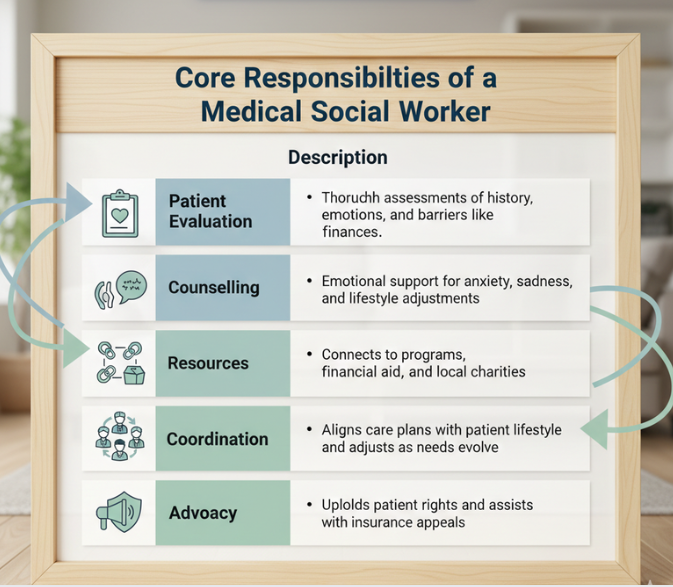
To truly understand what a medical social worker does in home health care, it helps to look at the variety of services they perform. Their responsibilities are broad yet interconnected, addressing both immediate and long-term patient needs.
1. Patient Evaluation and Assessment
Before developing a care plan, social workers conduct thorough assessments to understand a patient’s medical history, emotional state, social circumstances, and support systems. They identify barriers such as limited finances, family conflicts, or accessibility issues that might hinder recovery.
These insights allow the care team to tailor interventions that match real-life conditions, not just clinical diagnoses.
2. Counseling and Emotional Support
Illness, disability, and recovery often trigger emotional distress. A medical social worker offers counseling to help patients and families cope with anxiety, sadness, and uncertainty. Through compassionate listening and guidance, they create a supportive environment that promotes mental and emotional health.
This aspect of care is particularly important for patients adjusting to lifestyle changes such as loss of independence or long-term rehabilitation.
3. Connecting Families to Resources
Social workers are deeply familiar with community-based programs, financial aid options, and public benefits. They link patients to services such as meal delivery programs, mobility aid grants, or mental health counseling. They can also coordinate with charities or government agencies to ensure patients receive the resources they deserve.
By bridging these connections, social workers help lighten the financial and logistical stress often experienced by families managing home care.
4. Coordinating with the Medical Team
In home health care, communication among professionals is vital. The medical social worker facilitates coordination between physicians, nurses, and therapists to ensure care strategies align with the patient’s lifestyle and family situation.
If changes occur — such as a shift in mobility, mental health, or home safety needs — the social worker helps adjust the care plan accordingly. This ongoing coordination prevents miscommunication and ensures seamless support across all aspects of care.
5. Patient Advocacy
Advocacy is central to the social worker’s role. They serve as the patient’s voice within the healthcare system, ensuring their preferences and rights are upheld. Whether it’s clarifying insurance coverage, appealing decisions, or seeking alternative care arrangements, the medical social worker actively defends the patient’s best interests.
How a Medical Social Worker Supports the Care Team

Home health care functions best when professionals collaborate closely. The medical social worker strengthens this team dynamic by acting as a bridge between clinical plans and real-world application.
Here’s how their support enhances the broader care team:
- For Nurses: They help identify emotional or social triggers that may affect medication adherence or recovery progress.
- For Therapists: They recommend environmental changes or assistive devices to create safer spaces for therapy exercises.
- For Physicians: They relay feedback about family concerns or living conditions that might influence treatment compliance.
This integration ensures that medical interventions are complemented by practical, compassionate support systems designed for sustained progress.
The Difference Between a Medical Social Worker and a Regular Social Worker
While both professions share common principles—empathy, advocacy, and social support—a medical social worker has specialized training related to healthcare environments. They understand medical terminology, insurance procedures, and clinical workflows, which allows them to collaborate effectively with doctors and nurses.
General social workers focus on broader social issues like employment, housing, or community programs, whereas medical social workers concentrate on the intersection of health and daily life. Their expertise helps ensure patients receive the care and resources required for both physical and emotional well-being.
How Patients Benefit from Having a Medical Social Worker

Having a medical social worker involved in care offers tangible benefits that improve quality of life for patients and peace of mind for families. These include:
- Improved Access to Resources: They streamline the process of applying for benefits, equipment, or funding that patients might not know exist.
- Better Emotional Health: Counseling services reduce anxiety, helping patients adapt to treatment or recovery with clearer expectations.
- Enhanced Coordination of Care: Families experience less confusion about next steps when a social worker manages communication and paperwork.
- Empowered Decision-Making: With professional guidance, patients and their families can make well-informed choices about care options and long-term planning.
The presence of a medical social worker often results in more organized, compassionate, and sustainable care outcomes.
Common Situations Where Medical Social Workers Get Involved
In home health care, social workers assist in a wide variety of circumstances, including:
- Transitioning patients from hospital to home after surgery or illness.
- Counseling families adjusting to chronic illness or disability.
- Guiding applications for financial assistance or insurance claims.
- Arranging hospice care or palliative support for end-of-life patients.
- Resolving family conflicts about caregiving roles or decisions.
Their flexibility and wide expertise allow them to adapt to each patient’s unique story, providing insight and comfort along the way.
The Value of a Holistic Approach

What sets home health care apart is its holistic nature—it treats the person as a whole. A medical social worker exemplifies this philosophy by paying attention to more than symptoms. They consider mental health, emotional resilience, relationships, and community connection.
This integrated approach recognizes that healing takes more than medication or therapy—it also requires understanding, empathy, and consistent support. By identifying and resolving emotional or social obstacles, medical social workers make a patient’s recovery smoother and more meaningful.
Final Thoughts
Behind every meaningful home health care experience is a coordinated team working to strengthen the patient’s body, mind, and spirit. The medical social worker may not administer medicine or perform direct therapies, but their presence ensures families feel guided, informed, and emotionally supported throughout recovery. They weave compassion and advocacy into every step, turning complex circumstances into manageable, hopeful journeys.
Dedicated to this same vision, Genezen Home Health Care Services, Inc. offers the combined expertise of nurses, therapists, and medical social workers who work as one seamless team. Their holistic approach to care empowers families to focus on healing while trusted professionals handle the planning, coordination, and emotional support needed to ensure comfort and lasting well-being at home.