


Living with a disability can influence nearly every corner of a person’s daily life—how they move, communicate, engage socially, care for themselves, or participate in school, work, and community activities. But despite the challenges, independence and meaningful living are absolutely possible with the right support system. Occupational Therapy (OT) sits at the heart of that support, ensuring that individuals with disabilities have the skills, tools, environment, and confidence to take charge of their lives.
This article breaks down the powerful role of OT for disability, exploring what OT is, how it works, how it can transform daily living, and why it continues to be a cornerstone of quality-of-life improvement for people across all ages and ability levels.
What Makes OT Unique?
Occupational Therapy stands out because it focuses on functional independence—the practical skills people need to live meaningful lives. Instead of concentrating solely on medical recovery or physical improvement, OT looks at the whole person: their strengths, goals, environment, roles, and barriers.
OT vs. Physical Therapy
Many people confuse OT and PT (Physical Therapy). While they work hand in hand:
- PT focuses on strengthening the body, improving movement, and rehabilitating physical function.
- OT focuses on what the person wants and needs to do every day, and supports them by developing skills, modifying tasks, and adjusting the environment.
In simpler terms, PT helps you improve how you move; OT helps you use those movements to live your life.
Who Benefits from OT?

OT supports individuals across a wide range of disabilities, including:
- Physical Disabilities: cerebral palsy, spinal cord injuries, muscular dystrophy, limb differences, arthritis
- Developmental Disabilities: autism, intellectual disability, Down syndrome, global developmental delays
- Cognitive or Neurological Disabilities: traumatic brain injury, stroke, dementia, learning disorders, ADHD
- Sensory Disabilities: sensory processing disorder, visual impairments, hearing impairments
- Mental Health Disabilities: anxiety, mood disorders, panic disorders, schizophrenia
Across all these conditions, OT plays the role of a guide, teacher, problem-solver, and advocate—helping individuals reclaim independence and confidence.
What Occupational Therapists Actually Do
An OT’s job is both analytical and creative. They:
- Assess strengths, challenges, environments, and daily routines.
- Develop goals that reflect the client’s values and needs.
- Create intervention plans that include therapy activities, adaptive equipment, environmental changes, or skill-building strategies.
- Collaborate with families, teachers, employers, caregivers, and other professionals.
- Track progress and continuously adjust the plan to match the individual’s growth.
The focus is not only on treatment, but on enabling participation in life.
How Occupational Therapy Improves Daily Living

The heart of OT is restoring—or sometimes building from the ground up—the essential skills needed for daily living. These improvements ripple into better independence, stronger emotional well-being, and fuller participation in life.
1. Building Independence in Self-Care Skills
Self-care skills, known as “Activities of Daily Living” (ADLs), are the foundation of independent living. These tasks may seem simple to some but can feel overwhelming or inaccessible to individuals with disabilities.
OT helps individuals strengthen and master skills such as:
- Bathing and hygiene
- Dressing and grooming
- Eating and feeding
- Toileting
- Mobility during daily routines
To make these tasks easier and safer, occupational therapists use:
- Adaptive techniques (e.g., one-handed dressing strategies)
- Assistive equipment (button hooks, long-handled sponges, weighted utensils)
- Positioning and stabilization methods
- Fine motor and coordination training
Over time, these supports help individuals rely less on others and feel more confident in their independence.
2. Enhancing Home and Community Participation
Independence extends far beyond grooming and hygiene. A full life includes home management, social activities, recreation, and community involvement.
OT teaches skills and strategies for:
- Meal preparation
- Light housekeeping
- Laundry organization
- Home safety awareness
- Money management
- Using public transportation
- Shopping and community navigation
Therapists also evaluate the home environment to identify potential hazards or barriers. They may recommend modifications such as:
- Grab bars
- Non-slip mats
- Ramps
- Improved lighting
- Accessible storage solutions
These adjustments reduce risk while supporting independence, safety, and dignity.
3. Improving Work and School Performance
School-aged children and working adults with disabilities often face challenges that prevent them from fully engaging in learning or employment. OT addresses these barriers in practical and empowering ways.
For children, OT can support:
- Handwriting and fine motor skills
- Following routines
- Focus and attention
- Sensory regulation
- Social interaction
- Classroom participation
- Use of assistive technology
For adults, OT assists with:
- Ergonomic setup
- Work-related task analysis
- Energy conservation strategies
- Mobility around the workplace
- Job-specific skill development
- Self-regulation techniques
- Accommodations under disability laws
When people are equipped for success at work or school, their confidence grows—and so does their quality of life.
4. Social & Behavioral Skill Development
A major but often overlooked part of OT for disability is the impact on behavioral and social skills.
OT addresses:
- Emotional regulation
- Impulse control
- Stress management
- Social communication and interaction
- Conflict resolution
- Motivation and self-esteem
- Executive functioning
These skills matter because they help individuals form relationships, feel included, and navigate daily challenges with resilience.
Whether working with children who struggle in group settings or adults who need support managing emotions and social demands, OT provides practical and meaningful tools to thrive socially and emotionally.
Therapeutic Tools & Approaches Used in OT

Every occupational therapy plan is individualized because every person’s life, abilities, and goals are unique. To support these diverse needs, therapists draw from a wide range of tools, techniques, and therapeutic approaches.
1. Adaptive Equipment and Assistive Technology
OTs specialize in recommending the right tools to enhance independence. Examples include:
- Communication devices and speech boards
- Wheelchairs, walkers, or gait aids
- Weighted blankets or vests
- Modified utensils
- Dressing aids
- Sensory tools (fidgets, chewables, noise-canceling headphones)
- Tablet-based apps for communication, cognition, or scheduling
OTs also train individuals and families to use this equipment confidently and effectively.
2. Task Grading and Activity Modification
This approach involves adjusting the difficulty level of a task to match the person’s abilities. It can mean:
- Breaking tasks into smaller steps
- Simplifying or organizing the environment
- Providing supports while gradually reducing them
- Increasing the complexity of tasks as the person improves
This method promotes progress without overwhelming the individual.
3. Sensory Integration Techniques
For individuals with sensory processing difficulties, the world can feel chaotic, overwhelming, or under-stimulating. OT uses sensory integration to help the nervous system respond more effectively to sensory input.
Strategies can include:
- Deep-pressure activities
- Sensory diets
- Swing therapy
- Proprioceptive input
- Auditory or visual modulation
- Tactile play
These techniques help individuals self-regulate, stay calm, and participate better in daily activities.
4. Cognitive Rehabilitation
Many disabilities impact cognitive functions such as memory, attention, problem-solving, or planning. OT provides cognitive interventions that may include:
- Memory techniques
- Organizational tools
- Visual supports
- Problem-solving activities
- Time-management strategies
- Executive functioning exercises
These interventions are invaluable for individuals with stroke, traumatic brain injury, developmental disabilities, or age-related cognitive decline.
The Life-Changing Benefits of OT for Disability
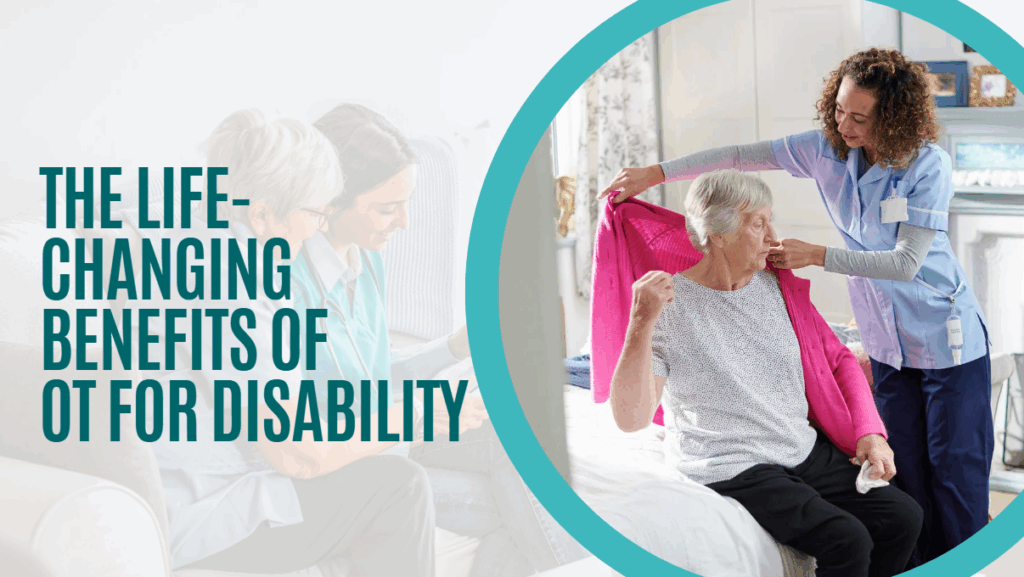
Across all ages and types of disabilities, OT unlocks potential and empowers individuals to participate more fully in life.
Here are the most profound and lasting benefits:
1. Improved Quality of Life
Occupational therapy doesn’t just teach skills—it opens doors to independence, dignity, and joy. When individuals can engage in meaningful activities, they:
- Feel more capable and confident
- Experience greater purpose
- Develop stronger routines and stability
- Gain a sense of achievement
- Participate in life events they value
Quality of life improves not only for the individual but also for families and caregivers who feel more supported and less burdened.
2. Enhanced Physical, Cognitive & Emotional Function
OT supports multi-dimensional growth:
- Physical: improved strength, coordination, balance, and motor planning
- Cognitive: enhanced memory, attention, and organization
- Emotional: better self-regulation, self-esteem, and coping skills
This holistic improvement helps individuals manage challenges more effectively and reduce limitations in daily life.
3. Greater Community Inclusion & Social Engagement
With the right tools, skills, and confidence, individuals with disabilities become active participants in their community. They can enjoy:
- School activities
- Employment opportunities
- Hobbies and recreation
- Social gatherings
- Independent errands
- Volunteer work
Community inclusion is a powerful contributor to emotional health and long-term well-being.
4. Prevention of Further Complications
OT doesn’t just improve current function—it also prevents future problems, including:
- Injuries from improper body mechanics
- Falls or accidents at home
- Behavioral crises due to unmet sensory needs
- Regression of skills from lack of practice
- Caregiver burnout
- Emotional deterioration due to isolation
By teaching sustainable strategies, OT supports long-term health, safety, and independence.
How to Get Started with Occupational Therapy

Beginning OT may feel overwhelming, but the process is simple and supportive. The goal is to make sure the individual receives the right interventions at the right time.
Steps to Begin
- Request an OT evaluation from a clinic, hospital, school, home care agency, or community-based therapy provider.
- Gather relevant records such as medical diagnoses, IEP/504 plans, or physician referrals if required.
- Participate in a detailed assessment where the OT observes daily activities, analyzes environments, and identifies goals.
- Review and approve the care plan, ensuring goals reflect the individual’s needs and priorities.
What to Expect After Starting
Once therapy begins, individuals and families can expect:
- Weekly or biweekly sessions
- Home exercises or practice activities
- Ongoing communication with caregivers or teachers
- Progress reviews and updated goals
- Training on assistive equipment or adaptive strategies
How to Improve OT Success
To get the most out of therapy:
- Be consistent with session attendance
- Practice skills at home
- Stay involved and ask questions
- Celebrate progress, no matter how small
- Keep communication open with the therapist
Engaged participation accelerates growth and helps individuals reach their highest potential.
Final Thoughts
Occupational therapy creates meaningful, lasting change for individuals with disabilities by helping them build essential skills for everyday living. It supports independence through personalized strategies that make daily tasks safer, easier, and more manageable. Beyond physical improvements, OT nurtures confidence and emotional resilience, which are crucial for navigating life with greater ease. By addressing the whole person—mind, body, and environment—OT empowers individuals to rediscover purpose and participate in the activities they value most. With early support and consistent guidance, people can experience significant growth, enhanced quality of life, and renewed hope for the future.
If you or your loved one is ready to take the next step toward greater independence, Genezen Home Health Care is here to help. Their compassionate team provides customized occupational therapy services designed to meet each individual’s unique needs at home. They focus on safety, comfort, and meaningful progress to ensure every client feels supported throughout their journey. With professional expertise and a warm, patient-centered approach, Genezen helps individuals regain confidence and functional abilities. Reach out today to learn how Genezen Home Health Care can guide you or your loved one toward a healthier, more empowered life.